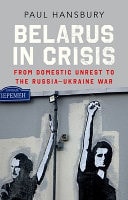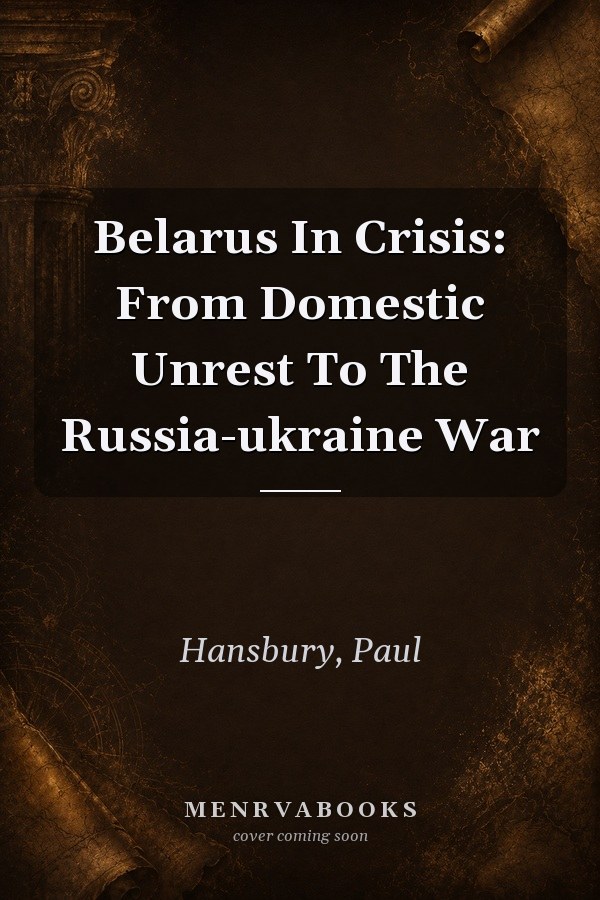
Belarus in Crisis: From Domestic Unrest to the Russia-Ukraine War
0
0
As an Amazon Associate and affiliate partner, Menrva Books earns from qualifying purchases. Learn more
Author Description
In 2020, mass anti-government protests erupted across Belarus. The brutal crackdown that followed shocked the international community: the authorities arrested tens of thousands of citizens, shut down independent media and NGOs, and fomented a migrant crisis on the European Union's border. But where many thought Belarus's dictator, Alyaksandr Lukashenka, would fall, he instead turned to Moscow for support, intensifying repression. Many of his opponents fled the country. Then, in February 2022, Belarus provided a staging area for Russia's invasion of Ukraine, allowing troops and missile systems to be based on its territory as large-scale war returned to Eastern Europe once again. Many outsiders now view Belarus as little more than a Russian military district, rather than a sovereign country. Paul Hansbury offers a wide-ranging account of these two related crises.
Menrva's Summary
THE THESIS
This book investigates the rapid erosion of Belarusian sovereignty and the geopolitical transformation of the nation from a site of domestic civil unrest to a strategic staging ground for the Russian invasion of Ukraine. Paul Hansbury, a specialist in Belarusian politics, synthesizes political analysis and historical context to explain how Alyaksandr Lukashenka’s regime survived the 2020 protests by deepening its dependence on the Kremlin. The work argues that this shift fundamentally altered Belarus's status in the international order, effectively subordinating its military and political autonomy to Russian interests.
THE SCOPE MAP
What You Will Find
- A detailed timeline of the 2020 anti-government protests and the subsequent state-led crackdown on civil society.
- An analysis of the migrant crisis on the European Union border as a tool of state policy.
- Examination of the military and logistical support provided by Belarus during the 2022 Russian invasion of Ukraine.
- A critical assessment of Belarus's current status as a sovereign state versus its role as a de facto Russian military district.
THE AUTHORITY PERSPECTIVE
Experts identify this work as a vital resource for understanding the contemporary political landscape of Eastern Europe. Readers frequently note the clarity of the author's analysis regarding the complex relationship between Minsk and Moscow.
Page Count:
0
Publication Date:
1900-01-01
Publisher:
Hurst & Company,
ISBN-10:
0197756387
ISBN-13:
9780197756386
History
Eastern Europe
Current Affairs
International relations
European History
Community Tags
Similar Books