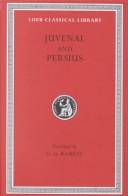
Satirae
0
0
As an Amazon Associate and affiliate partner, Menrva Books earns from qualifying purchases. Learn more
Author Description
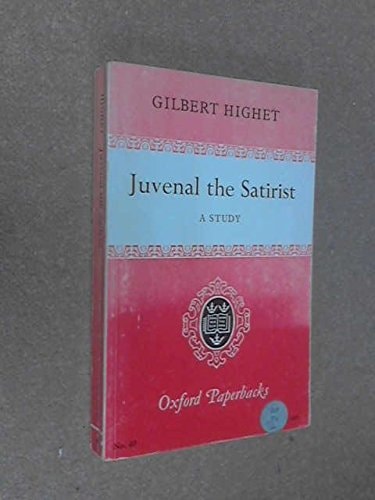
JUVENAL, Decimus Iunius Iuvenalis (c. A.D. 600-100); master of satirical hexameter poetry, was born in Aquinum, a rich freedman's son(?) who became a declaimer until middle age, and then between A.D. 100 and 140 used his powers in the composition first of scathing satires on Roman life, attacking the dead rather than the living, with special reference to ineptitude in poetry (Satire I); vices of fake philosophers (2); grievances of the worthy poor (3); and of clients (5); a council-meeting under Emperor Dominian (4); vicious women (6); prospects of letters and learning under a new emperor (7); virtue not birth as giving nobility (8); and the vice of homosexuals (9); we have the true object of prayer (10);, paraphrased by Johnson in 'The Vanity of Human Wishes'; spend-thrift and frugal eating (11); a friend's escape from shipwreck; and will-hunters(12); guilty conscience and desire for revenge (13); parents as examples (14); cannibalism in Egypt (15); privileges of soldiers (16, unfinished). PERSIUS, Aulus, Persius Flaccus (A.D. 34-62) of Volaterrae was of equestrian rank; he came to Rome and was trained in 'grammar', rhetoric, and Stoic philosophy. In company with his mother, sister and aunt and enjoying the friendship of Lucan and other famous people, he lived a sober life. He left six Satires only (in hexameters); after a prologue (in scazon metre) we have a Satire on the corruption of literature and morals (1); foolish methods of prayer (2); deliberately wrong living and lack of philosophy (3); the well-born insincere politician, and some of our own weaknesses (4); praise of Cornutus the Stoic; servility of men (5); and a chatty poem addressed to the poet Bassus (6).
Menrva's Summary
THE PULSE
The biting wit of ancient Rome is unleashed as poets Juvenal and Persius confront the moral decay and societal absurdities of their time. Juvenal, a master of satirical hexameter, uses his verses to critique the ineptitude in poetry, the vices of false philosophers, the plight of the poor, and the corruption of women, all while attacking the dead rather than the living. Persius, a younger contemporary, offers six satires that delve into the corruption of literature and morals, foolish methods of prayer, and the insincerity of politicians, all filtered through a Stoic philosophical lens. Both poets employ their sharp observations to expose the follies and vices of Roman society, using their verses as a mirror to reflect the era's flaws.
INSIDE THE PAGES
- Juvenal's Satire I: Ineptitude in poetry and the general corruption of the age.
- Juvenal's Satire II: The hypocrisy of 'fake philosophers'.
- Juvenal's Satire III: The grievances of the worthy poor in Rome.
- Juvenal's Satire VI: The vices and follies of women.
- Persius' Satire I: The corruption of literature and morals.
- Persius' Satire II: Foolish and misguided methods of prayer.
- Persius' Satire IV: The insincere politician and personal weaknesses.
- Persius' Satire V: Praise of the Stoic philosopher Cornutus and the servility of men.
THE COLLECTIVE ECHO
These collected satires by Juvenal and Persius offer a direct window into the social and moral critiques of ancient Rome. The works are celebrated for their sharp wit, unflinching honesty, and masterful use of poetic form to dissect societal flaws. Readers and scholars alike have long appreciated the enduring relevance of their observations on human nature, hypocrisy, and the pursuit of virtue. The poems provide a rich, often scathing, commentary that continues to resonate with contemporary audiences, highlighting the timelessness of satire as a literary and social tool.
Page Count:
415
Publication Date:
1979-01-01
ISBN-10:
0674991028
Classics
Poetry
Satire