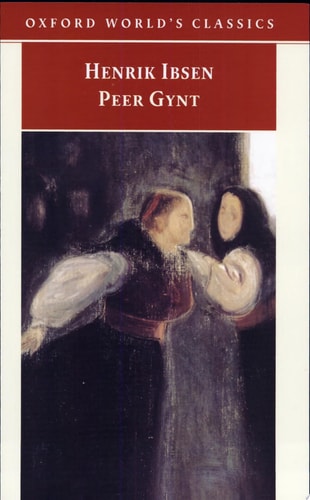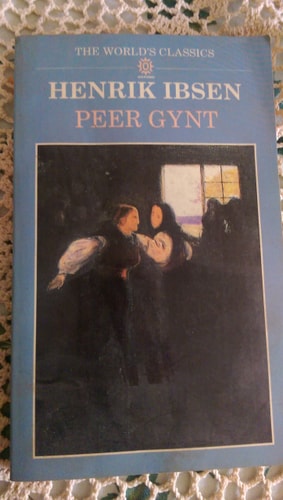
Peer Gynt: A Dramatic Poem
0
0
As an Amazon Associate and affiliate partner, Menrva Books earns from qualifying purchases. Learn more
Author Description
Ibsen's last work to use poetry as a medium of dramatic expression, Peer Gynt carries the marks of his later, prose plays. Its literary antecedents include Faust and Hans Christian Andersen, but the play draws on Ibsen's own childhood and character. He wrote that he derived many features of Peer Gynt from "self-dissection," creating a self-centered and irresponsible, but ultimately forgiveable, rogue.
Menrva's Summary
THE PULSE
Peer Gynt, a boastful and irresponsible dreamer, embarks on a sprawling, surreal quest to define his own identity while fleeing the consequences of his reckless actions. Driven by an insatiable need for self-aggrandizement, Peer navigates a world that blurs the lines between reality, Norwegian folklore, and psychological projection. He encounters trolls, merchants, and historical figures, all while attempting to reconcile his grandiose self-image with his actual failures. The narrative utilizes a non-linear, episodic structure that shifts rapidly between satirical social commentary and introspective, dream-like sequences.
INSIDE THE PAGES
- Use of verse as the primary medium for dramatic expression
- Integration of Norwegian folklore and supernatural elements
- Episodic structure spanning decades of the protagonist's life
- Satirical critique of 19th-century social norms and national identity
- Exploration of the conflict between individual ego and social responsibility
- Symbolic representation of the self through the metaphor of an onion
- Philosophical inquiry into the nature of existence and redemption
- Blending of realistic character study with fantastical, allegorical scenarios
THE COLLECTIVE ECHO
Discussion often centers on the complex, often contradictory nature of the protagonist, who serves as both a charming rogue and a cautionary figure of moral vacuity. Readers frequently highlight the play's linguistic richness and the seamless way Ibsen transitions from biting social satire to profound existential meditation. Critics often note that the work functions as a bridge between Ibsen's earlier poetic dramas and his later, more grounded prose plays. The atmosphere is frequently described as shifting from whimsical to haunting, reflecting the protagonist's own unstable sense of self. Many readers find the final act's focus on redemption and the search for meaning to be the most enduring aspect of the text.
Page Count:
192
Publication Date:
1989-08-10
Publisher:
Oxford University Press
ISBN-10:
0192822276
ISBN-13:
9780192822277
Poetry
Drama
Satire
Scandinavian
Dramatic works
Classic Literature
Folklore
Community Tags
Other Editions(3)

Similar Books