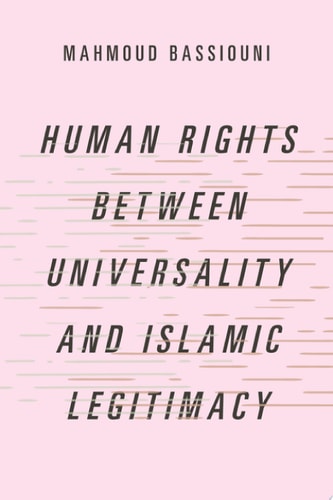
Human Rights Between Universality and Islamic Legitimacy: Studies in Comparative Political Theory
0
0
As an Amazon Associate and affiliate partner, Menrva Books earns from qualifying purchases. Learn more
Author Description
Historically, The Dynamics Underlying Contemporary Muslim Human Rights Discourse And The Related Question Of Identity Can Be Traced Back To The Second Half Of The Nineteenth Century. Faced With European Superiority And Aware Of Their Own Need For Reform, Muslim Intellectuals Pondered How To Explain The Stagnation Of Islamic Societies And What Initiatives Were Needed To Bring About The Desired Progress. Many Muslims Were Troubled Not Only By Europe's Material Superiority, But Also By The Sense Of Inferiority They Felt In The Face Of Europe's Ideological Defamation Of Islamic Societies. Any Person, Wrote The French Philosopher Ernest Renan In 1883, With A Modicum Of Instruction In The Affairs Of Our Time Clearly Sees The Current Inferiority Of Muslim Countries, The Decadence Of The States Governed By Islam, The Intellectual Nonentity Of The Races That Derive Their Culture And Education Solely From This Religion. Thus, The Idea Of Reform Derived Its Impetus From An Ideological Challenge That Saw The Causes Of Muslim Stagnation As Residing In Islam And Identified The Latter As Inhibiting, Or Even Blocking, The Progress Of Islamic Societies. Accordingly, The Crisis Of The Muslim Search For Identity Unfolded In Response To The Question Of How To Define Oneself In Relation To Europe And What Role Islam Should Play In This Regard. In A Broader Sense, Muslims Were Confronted With The Basic Questions Of Political Philosophy: What Principles Should We Live By, And Where Do We Derive These Principles From? Can The Principles Of A Modern Society Be Derived From Islam? Or Is It Necessary To Refer To The Ideas And Institutions Of Europe? To What Extent Can We Then Still Define Ourselves As Muslims In Relation To Europe? In Response To These Questions, Three Broad Currents Of Thought Can Be Identified. 2.1 Trialogue Of Identities Echoing The European Position, A Secularist School Of Thought Believed That Muslims, By Virtue Of Their Religion, Were Intellectually Incapable Of Develop
Menrva's Summary
THE THESIS
This work investigates the fundamental tension between the universalist claims of international human rights frameworks and the internal search for political and cultural legitimacy within Islamic societies. Mahmoud Bassiouni, an expert in comparative political theory, examines the historical trajectory of Muslim intellectual discourse since the nineteenth century. He analyzes how the encounter with European colonial superiority and ideological critique forced Muslim scholars to reconcile traditional religious identity with the requirements of modern governance. The book argues that the contemporary crisis of identity in the Muslim world is rooted in the ongoing debate over whether political principles should be derived from Islamic jurisprudence or imported from Western institutional models.
THE SCOPE MAP
What You Will Find
- A historical analysis of Muslim intellectual responses to European ideological challenges from the 1880s to the present.
- A comparative framework evaluating secularist, reformist, and traditionalist schools of thought regarding human rights.
- Examination of the philosophical conflict between universal human rights standards and Islamic legal legitimacy.
- An exploration of the socio-political factors contributing to the perceived stagnation of Islamic states.
THE AUTHORITY PERSPECTIVE
Scholars and political theorists recognize this text as a rigorous contribution to the study of comparative political philosophy. Readers frequently note the academic density of the prose, which provides a nuanced understanding of the complex intersection between religious tradition and modern political legitimacy.
Page Count:
312
Publication Date:
2024-09-23
Publisher:
Oxford University Press
ISBN-10:
0197753892
ISBN-13:
9780197753897
Politics
Philosophy
History
Political Theory
Specific Topics
Islamic Studies
Human rights
World politics
Community Tags
Similar Books

Reader Comments
Share Your Thoughts
No comments yet. Be the first to share your thoughts!