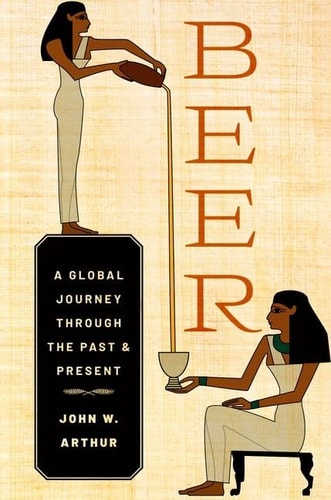
Beer: A Global Journey through the Past and Present
0
0
As an Amazon Associate and affiliate partner, Menrva Books earns from qualifying purchases. Learn more
Author Description
A fascinating exploration of beer, ancient and contemporary, and its role in shaping human societyBeer is and has always been more than an intoxicating beverage. Ancient beer produced in the Near East, Asia, Africa, Europe, and the Americas was a food that had a remarkable role in shaping the development of agriculture and some of the earliest state-level societies. Its invention 13,000 years ago was one of the fundamental motivations for the domestication of grains around the world. In early states, the control over the technological knowledge and resources to produce beer contributed to social hierarchies. Beer even likely provided the capital to motivate laborers to construct the ancient pyramids and other large-scale public works. The fermentation of beer also provided a healthy and safe alternative to the contaminated drinking water in early states and it continues to do so among rural Indigenous populations today. Beer is a social lubricant that brings people together and, in many Indigenous societies both past and present, is a gift connecting people to their ancestors. The same innovations pioneered by ancient brewers are transforming the types of ingredients and flavors produced by the global craft beer industry.In Beer, archaeologist John W. Arthur takes readers on an exciting global journey to explore the origins, development, and recipes of ancient beer. This unique book focuses on past and present non-industrial beers, highlighting their significance in peoples' lives through four themes: innovating new technologies, ensuring health and well-being, building economic and political statuses, and imbuing life with ritual and religious connections. As this book amply illustrates, beer has shaped our world in remarkable ways for the past 13,000 years.
Menrva's Summary
THE THESIS
This book investigates how the invention and consumption of beer over the last 13,000 years have functioned as a primary catalyst for the development of agriculture, social hierarchies, and state-level societies. Archaeologist John W. Arthur utilizes his expertise in material culture and ancient societies to examine the intersection of brewing technology and human progress. By analyzing archaeological evidence from diverse regions including the Near East, Africa, and the Americas, the author argues that beer served as a critical economic and ritualistic tool that enabled the construction of early civilizations. The text frames brewing not merely as a culinary practice, but as a fundamental driver of human innovation and social organization.
THE SCOPE MAP
What You Will Find
- Analysis of the domestication of grains and its direct link to early fermentation practices.
- Examination of beer as a safe, nutritional alternative to contaminated water sources in ancient and modern rural contexts.
- Case studies on how control over brewing technology established political power and labor capital in early states.
- Exploration of the ritualistic and religious significance of beer in Indigenous societies across the globe.
THE AUTHORITY PERSPECTIVE
Experts recognize this work as a significant contribution to the archaeology of food and social history. Readers frequently note the accessible yet scholarly tone, which effectively bridges the gap between academic research and general interest in the history of brewing.
Page Count:
304
Publication Date:
2024-01-01
Publisher:
Oxford University Press
ISBN-10:
0197776981
ISBN-13:
9780197776988
Politics
History
Beer
Agriculture
Trades & Technology
Customs & Traditions
Anthropology
Food And Drink
Archaeology
Food Science
Social Science
Engineering
Community Tags
Similar Books