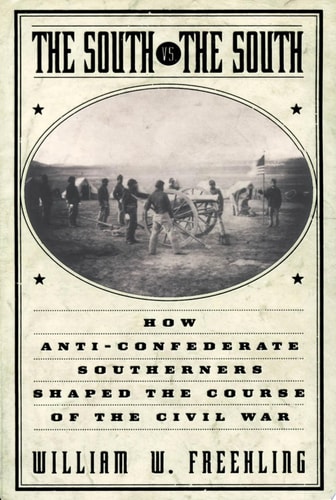
The South vs. the South: How Anti-Confederate Southerners Shaped the Course of the Civil War
0
0
As an Amazon Associate and affiliate partner, Menrva Books earns from qualifying purchases. Learn more
Author Description
Why Did The Confederacy Lose The Civil War? Most Historians Point To The Larger Number Of Union Troops, For Example, Or The North's Greater Industrial Might. Now, In The South Vs. The South, One Of America's Leading Authorities On The Civil War Era Offers An Entirely New Answer To This Question. William Freehling Argues That Anti-confederate Southerners--specifically, Border State Whites And Southern Blacks--helped Cost The Confederacy The War. White Men In Such Border States As Missouri, Kentucky, And Maryland, Freehling Points Out, Were Divided In Their Loyalties--but Far More Joined The Union Army (or Simply Stayed Home) Than Marched Off In Confederate Gray. If They Had Enlisted As Rebel Troops In The Same Proportion As White Men Did Farther South, Their Numbers Would Have Offset All The Confederate Casualties During Four Years Of War. In Addition, When Those States Stayed Loyal, The Vast Majority Of The South's Urban Population And Industrial Capacity Remained In Union Hands. And Many Forget, Freehling Writes, That The Slaves' Own Decisions Led To A Series Of White Decisions (culminating In The Emancipation Proclamation) That Turned Federal Forces Into An Army Of Liberation, Depriving The South Of Labor And Adding Essential Troops To The Blue Ranks. Whether Revising Our Conception Of Slavery Or Of Abraham Lincoln, Or Establishing The Antecedents Of Martin Luther King, Or Analyzing Union Military Strategy, Or Uncovering New Meanings In What Is Arguably America's Greatest Piece Of Sculpture, Augustus St.-gaudens' Shaw Memorial, Freehling Writes With Piercing Insight And Rhetorical Verve. Concise And Provocative, The South Vs. The South Will Forever Change The Way We View The Civil War.
Menrva's Summary
THE THESIS
The book investigates the primary factors contributing to the Confederate defeat in the American Civil War, specifically challenging the traditional emphasis on Northern industrial and numerical superiority. William Freehling, a prominent historian of the Civil War era, utilizes demographic data and political analysis to argue that internal dissent within the South—specifically from border state whites and enslaved populations—was a decisive factor in the Union victory. He posits that the strategic choices made by these groups fundamentally altered the military and economic landscape of the conflict.
THE SCOPE MAP
What You Will Find
- Analysis of the political and military loyalties of border state populations in Missouri, Kentucky, and Maryland.
- Examination of the role of enslaved people in shifting Union military strategy and labor dynamics.
- Evaluation of the impact of Southern industrial and urban centers remaining under Union control.
- Reassessment of key historical figures and cultural artifacts, including Abraham Lincoln and the Shaw Memorial.
THE AUTHORITY PERSPECTIVE
Historians and scholars recognize this work as a significant revisionist contribution to Civil War historiography. Readers frequently note the author's ability to synthesize complex social dynamics into a concise and provocative argument.
Page Count:
256
Publication Date:
1998-12-31
Publisher:
Oxford University Press
ISBN-10:
019802990X
ISBN-13:
9780198029908
Western
History
Civil War
Military History
Social History
Community Tags
Similar Books