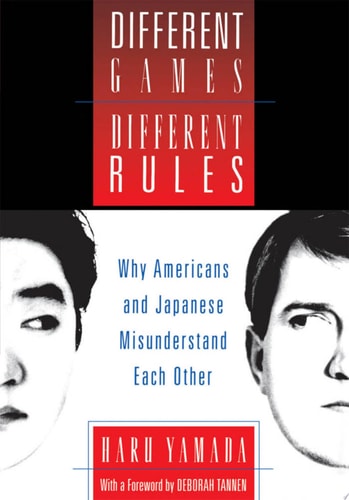
Different Games, Different Rules: Why Americans and Japanese Misunderstand Each Other
0
0
As an Amazon Associate and affiliate partner, Menrva Books earns from qualifying purchases. Learn more
Author Description
Japan And The United States Are In Closer Contact Politically And Economically Than Ever Before, Yet In Many Ways Our Nations Are As Far From Mutual Understanding As Ever. Misconceptions And Miscommunications Between East And West Continue To Plague This Important Relationship, Frustrating The Best Efforts Of Both Cultures To Work Together. Stereotypes Abound: Americans See Japanese As Evasive And Inscrutable, While Japanese See Americans As Pushy And Selfish. What Causes These Persistent Misunderstandings, And What Can Be Done To Avoid Them? Fluent In Both Languages And At Home In Both Cultures, Haru Yamada Brings An Insiders Perspective And A Linguists Training To This Difficult Question, Illuminating The Many Reasons Why Americans And Japanese Misunderstand One Another. Social Organization, She Explains, Shapes The Way We Talk. Because American And Japanese Cultures Value Different Kinds Of Social Relationships, They Play Different Language Games With Different Sets Of Rules. In America, For Instance, Aesop's Fable About The Grasshopper And The Ants Ends With The Ants Scorning The Foolhardy Grasshopper. In Japan, However, The Story Has A Very Different Ending: The Ants Invite The Grasshopper In To Share Their Winter Meal, As They Appreciate How His Singing Spurred Them On During Their Summer Labors. In The Difference Between These Two Endings, Argues Yamada, Lies An Important Lesson: Americans, Because Of Their Unique Political History, Value Independence And Individuality, While Japanese Value Mutual Dependency And Interconnectedness. The Language Of Both Cultures Is Designed To Display And Reinforce These Values So That Words, Phrases And Expressions In One Language Can Have Completely Different Connotations In Another, Leading To All Manner Of Misunderstanding. Yamada Provides Numerous Examples. In Japan, For Instance, Silence Is Valued And Halting Speech Is Considered More Honest And Thoughtful Than Fluid Speech, While In America Forthright, Polished Speech Is Valued.
Menrva's Summary
THE THESIS
What fundamental linguistic and social differences drive the persistent cycle of misunderstanding between American and Japanese cultures? Haru Yamada, a linguist fluent in both languages and cultures, investigates how divergent social values regarding independence and interdependence shape communication styles. By analyzing the structural differences in how each society uses language to reinforce its core cultural norms, Yamada provides a framework for understanding why common interactions often result in friction.
THE SCOPE MAP
What You Will Find
- Comparative analysis of American individualism versus Japanese mutual dependency.
- Linguistic case studies examining how silence, speech fluidity, and phrasing carry different social connotations.
- Cultural interpretations of shared narratives, such as the fable of the Grasshopper and the Ants.
- Methodologies for identifying and navigating cross-cultural communication barriers in political and economic contexts.
THE AUTHORITY PERSPECTIVE
Experts and readers frequently cite this work as a foundational text for understanding the intersection of linguistics and social behavior in international relations. The prose is noted for its accessibility, making complex sociolinguistic concepts clear for both academic and general audiences.
Page Count:
190
Publication Date:
2002-01-01
Publisher:
Oxford University Press
ISBN-10:
0198025521
ISBN-13:
9780198025528
Politics
Words Language & Grammar
English
Linguistics
Categories
Reference
Communication
English & College Success
International relations
Kindle Store
Kindle eBooks
Sociology