
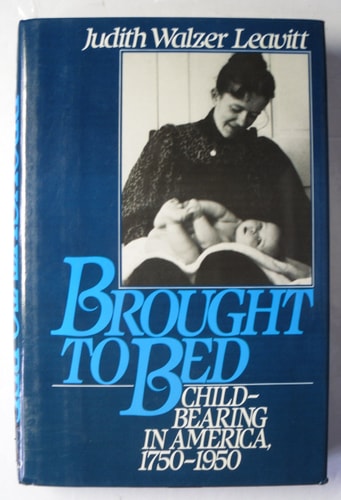
Brought to Bed: Childbearing in America, 1750-1950
0
0
As an Amazon Associate and affiliate partner, Menrva Books earns from qualifying purchases. Learn more
Author Description
"Childbirth is more than a biological even in women's lives," writes Judith Leavitt. "It is a vital component in the social definition of women." This book uses personal accounts by birthing women and their medical attendants to show how childbirth has changed from colonial times to the present. Brought to Bed describes the traditional woman-centered home-birthing practices and their replacement by male doctors and the movement of birth from the home to the hospital. Leavitt points out that childbearing women and their physicians gradually changed birth practices because they believed the increased medicalization would make birth safer and more comfortable. The irony was that infant and maternal mortality did not immediately decline when childbirth moved into the hospital--because of the danger of infection--and more and more women found the birth experience to be an alienating one. Outside of their homes, they felt "alone among strangers". Leavitt concludes that birthing women held considerable power to determine labor and delivery events as long as childbirth remained at home. Until the 1920s and '30s, birthing women surrounded themselves with a network of supportive women whom they knew and trusted. Women, in strength, negotiated with the various experts they invited to help and determined what would be done to their bodies. When childbirth moved to the hospital in the twentieth century, the medical profession won the upper hand. The book concludes with a discussion of recent events in American obstetrics that illustrate how women are seeking to retrieve some of the traditional woman--and family--centered aspects of childbirth.
Menrva's Summary
THE THESIS
How did the transition of childbirth from a woman-centered home practice to a medicalized hospital procedure redefine the social and physical experience of American women between 1750 and 1950? Judith Walzer Leavitt, a historian of medicine and women's health, utilizes a vast array of personal accounts, diaries, and medical records to examine the shift in obstetric power dynamics. She argues that while the medicalization of birth was pursued by both patients and physicians in the interest of safety and comfort, the resulting institutionalization often led to alienation and a loss of autonomy for the birthing mother.
THE SCOPE MAP
What You Will Find
- A detailed historical analysis of American obstetric practices from the colonial era through the mid-twentieth century.
- Examination of the transition from female-led home births to male-dominated hospital deliveries.
- Primary source evidence including personal letters, diaries, and accounts from both birthing women and medical attendants.
- Analysis of the socio-political implications of medicalization on maternal agency and the patient-physician relationship.
THE AUTHORITY PERSPECTIVE
Historians and medical sociologists frequently cite this work as a foundational text for understanding the evolution of American childbirth practices. Experts highlight the author's balanced approach in documenting the complex motivations of both women and physicians during this period of significant medical change.
Page Count:
295
Publication Date:
1986-01-01
Publisher:
Oxford University Press
ISBN-10:
0198020910
ISBN-13:
9780198020912
History
American History
Women
Medicine
Sociology
Childbirth
Obstetrics history
Woman Studies
Community Tags
Other Editions(3)

Similar Books













Reader Comments
Share Your Thoughts
No comments yet. Be the first to share your thoughts!