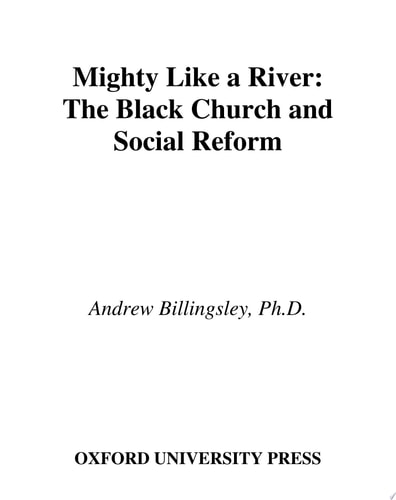
Mighty Like a River: The Black Church and Social Reform
0
0
As an Amazon Associate and affiliate partner, Menrva Books earns from qualifying purchases. Learn more
Author Description
Throughout the history of the African American people there has been no stronger resource for overcoming adversity than the black church. From its role in leading a group of free Blacks to form a colony in Sierra Leone in the 1790s to helping ex-slaves after the Civil War, and from playing major roles in the Civil Rights Movement to offering community outreach programs in American cities today, black churches have been the focal point of social change in their communities. Based on extensive research over several years, Mighty Like a River is the first comprehensive account of how black churches have helped shape American society. An expert in African American culture, Andrew Billingsley surveys nearly a thousand black churches across the country, including its oldest, the First African Baptist Church in Savannah, Georgia. These black churches, whose roots extend back to antebellum times, have periodically confronted social, economic, and political problems facing the African American community. Mighty Like a River addresses such questions as: How widespread and effective is the community activity of black churches? What are the patterns of activities being undertaken today? How do activist churches confront such problems as family instability, youth development, AIDS and other health issues, and care for the elderly? With profiles of the remarkable black heroes and heroines who helped create the activist church, and a compelling agenda for expanding the black church's role in society at large, Mighty Like a River is an inspirational, visionary, and definitive account of the subject.
Menrva's Summary
THE THESIS
How have black churches functioned as the primary engine for social reform and community resilience throughout African American history? Andrew Billingsley, a scholar of African American culture, utilizes extensive multi-year research to document the historical and contemporary influence of the black church. By examining the institution's evolution from the 1790s to the present, the author argues that these churches serve as essential hubs for political activism, economic support, and social welfare. The text provides a framework for understanding how these organizations address systemic challenges such as family instability, health crises, and youth development.
THE SCOPE MAP
What You Will Find
- Historical analysis of black church involvement in social movements from the 1790s to the modern era.
- A survey of nearly one thousand black churches across the United States, including foundational institutions like the First African Baptist Church.
- Case studies and profiles of key figures who spearheaded activist initiatives within their congregations.
- An assessment of contemporary community outreach programs addressing AIDS, elderly care, and youth development.
THE AUTHORITY PERSPECTIVE
Experts recognize this work as a foundational text for understanding the intersection of religious institutions and social activism in the United States. Readers frequently note the comprehensive nature of the research and the author's ability to synthesize historical data with modern sociological concerns.
Page Count:
288
Publication Date:
1999-01-01
Publisher:
Oxford University Press
ISBN-10:
0198026587
ISBN-13:
9780198026587
History
Religion
Politics
Christian Living
Social Reform
Sociology
Categories
United States
Ethnic Studies
Kindle Store
Church History
Church Leadership
Americas
Kindle eBooks
Community Tags
Similar Books