Creatures of Empire
0
0
As an Amazon Associate and affiliate partner, Menrva Books earns from qualifying purchases. Learn more
Author Description
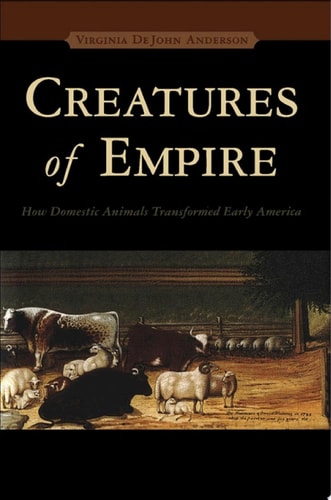
When We Think Of The Key Figures Of Early American History, We Think Of Explorers, Or Pilgrims, Or Native Americans--not Cattle, Or Goats, Or Swine. But As Virginia Dejohn Anderson Reveals In This Brilliantly Original Account Of Colonists In New England And The Chesapeake Region, Livestock Played A Vitally Important Role In The Settling Of The New World. Livestock, Anderson Writes, Were A Central Factor In The Cultural Clash Between Colonists And Indians As Well As A Driving Force In The Expansion West. By Bringing Livestock Across The Atlantic, Colonists Believed That They Provided The Means To Realize America's Potential. It Was Thought That If The Native Americans Learned To Keep Livestock As Well, They Would Be That Much Closer To Assimilating The Colonists' Culture, Especially Their Christian Faith. But Colonists Failed To Anticipate The Problems That Would Arise As Indians Began Encountering Free-ranging Livestock At Almost Every Turn, Often Trespassing In Their Cornfields. Moreover, When Growing Populations And An Expansive Style Of Husbandry Required Far More Space Than They Had Expected, Colonists Could See No Alternative But To Appropriate Indian Land. This Created Tensions That Reached The Boiling Point With King Philip's War And Bacon's Rebellion. And It Established A Pattern That Would Repeat Time And Again Over The Next Two Centuries. A Stunning Account That Presents Our History In A Truly New Light, Creatures Of Empire Restores A Vital Element Of Our Past, Illuminating One Of The Great Forces Of Colonization And The Expansion Westward.
Menrva's Summary
THE THESIS
How did the introduction of European livestock fundamentally alter the trajectory of colonial expansion and the nature of conflict between settlers and Indigenous populations in early America? Virginia DeJohn Anderson, a historian specializing in early American society, utilizes extensive archival research to argue that animals were not merely passive commodities but active agents in the colonization process. She posits that the clash between European husbandry practices and Indigenous land use created systemic tensions that directly fueled major conflicts, including King Philip's War and Bacon's Rebellion. By examining the intersection of agriculture, culture, and geography, the author provides a framework for understanding how the physical presence of livestock necessitated the appropriation of Native American territory.
THE SCOPE MAP
What You Will Find
- Comparative analysis of colonial husbandry practices in New England and the Chesapeake region.
- Examination of the cultural and religious expectations colonists held regarding livestock and Indigenous assimilation.
- Evidence drawn from colonial court records, land grants, and contemporary accounts of frontier life.
- Exploration of the environmental and economic pressures that drove westward expansion.
THE AUTHORITY PERSPECTIVE
Historians and scholars of early American history frequently cite this work as a foundational text for understanding the environmental dimensions of colonization. Readers often note the academic rigor of the research and the clarity with which Anderson connects mundane agricultural practices to large-scale geopolitical shifts.
Page Count:
336
Publication Date:
2004-01-01
Publisher:
Oxford University Press
ISBN-10:
0198035969
ISBN-13:
9780198035961
History
Colonial History
American History
Environmental History
Community Tags
Other Editions(2)
Similar Books