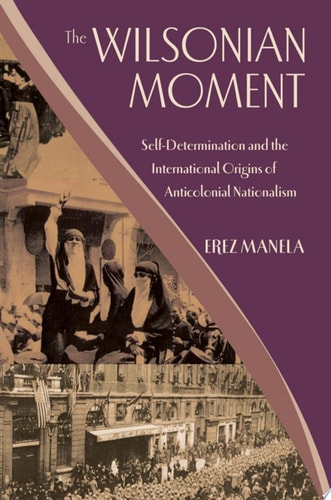
The Wilsonian Moment: Self-Determination and the International Origins of Anticolonial Nationalism
0
0
As an Amazon Associate and affiliate partner, Menrva Books earns from qualifying purchases. Learn more
Author Description
During The Paris Peace Conference Of 1919, While Key Decisions Were Debated By The Victorious Allied Powers, A Multitude Of Smaller Nations And Colonies Held Their Breath, Waiting To See How Their Fates Would Be Decided. President Woodrow Wilson, In His Fourteen Points, Had Called For A Free, Open-minded, And Absolutely Impartial Adjustment Of All Colonial Claims, Giving Equal Weight Would Be Given To The Opinions Of The Colonized Peoples And The Colonial Powers. Among Those Nations Now Paying Close Attention To Wilson's Words And Actions Were The Budding Nationalist Leaders Of Four Disparate Non-western Societies--egypt, India, China, And Korea. That Spring, Wilson's Words Would Help Ignite Political Upheavals In All Four Of These Countries. This Book Is The First To Place The 1919 Revolution In Egypt, The Rowlatt Satyagraha In India, The May Fourth Movement In China, And The March First Uprising In Korea In The Context Of A Broader Wilsonian Moment That Challenged The Existing International Order. Using Primary Source Material From America, Europe, And Asia, Historian Erez Manela Tells The Story Of How Emerging Nationalist Movements Appropriated Wilsonian Language And Adapted It To Their Own Local Culture And Politics As They Launched Into Action On The International Stage. The Rapid Disintegration Of The Wilsonian Promise Left A Legacy Of Disillusionment And Facilitated The Spread Of Revisionist Ideologies And Movements In These Societies; Future Leaders Of Third World Liberation Movements--mao Zedong, Ho Chi Minh, And Jawaharlal Nehru, Among Others--were Profoundly Shaped By Their Experiences At The Time. The Importance Of The Paris Peace Conference And Wilson's Influence On International Affairs Far From The Battlefields Of Europe Cannot Be Underestimated. Now, For The First Time, We Can Clearly See Just How The Events Played Out At Versailles Sparked A Wave Of Nationalism That Is Still Resonating Globally Today.
Menrva's Summary
THE THESIS
This book investigates how the rhetoric of Woodrow Wilson’s self-determination during the 1919 Paris Peace Conference catalyzed global anticolonial nationalist movements. Erez Manela, a historian specializing in international history, utilizes a comparative framework to analyze the intersection of American diplomatic idealism and the political aspirations of non-Western societies. By synthesizing primary source materials from archives across America, Europe, and Asia, the author argues that the 'Wilsonian moment' served as a critical, albeit disillusioning, turning point that reshaped the trajectory of twentieth-century decolonization efforts.
THE SCOPE MAP
What You Will Find
- Comparative analysis of the 1919 Egyptian Revolution, India's Rowlatt Satyagraha, China's May Fourth Movement, and Korea's March First Uprising.
- Examination of how nationalist leaders like Mao Zedong, Ho Chi Minh, and Jawaharlal Nehru interpreted and adapted Wilsonian language.
- Extensive use of multi-lingual primary source documentation from international diplomatic and local nationalist archives.
- A detailed study of the transition from imperial hegemony to the rise of revisionist ideologies in the post-World War I era.
THE AUTHORITY PERSPECTIVE
Historians and scholars of international relations frequently cite this work as a foundational text for understanding the global impact of the Paris Peace Conference beyond European borders. Readers often note the academic rigor and the clarity with which the author connects disparate regional uprisings to a singular, cohesive international phenomenon.
Page Count:
352
Publication Date:
2007-01-01
Publisher:
Ebsco Publishing
ISBN-10:
0198039158
ISBN-13:
9780198039150
History
Nationalism
International relations
Colonialism
Community Tags
Other Editions(2)

Similar Books









Reader Comments
Share Your Thoughts
No comments yet. Be the first to share your thoughts!