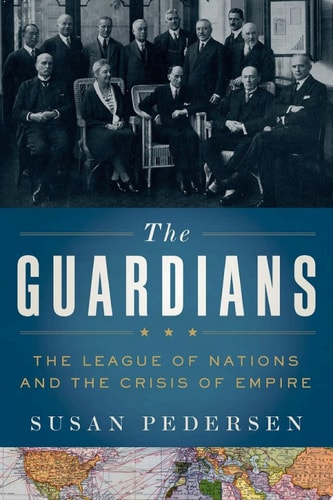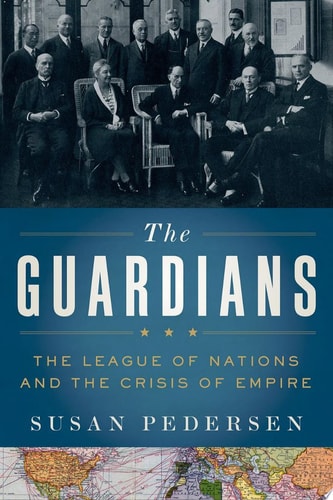
The Guardians
0
0
As an Amazon Associate and affiliate partner, Menrva Books earns from qualifying purchases. Learn more
Author Description
Winner Of The Cundill Prize In Historical Literature Shortlisted For The Lionel Gelber Prize At The End Of The First World War, The Paris Peace Conference Saw A Battle Over The Future Of Empire. The Victorious Allied Powers Wanted To Annex The Ottoman Territories And German Colonies They Had Occupied; Woodrow Wilson And A Groundswell Of Anti-imperialist Activism Stood In Their Way. France, Belgium, Japan And The British Dominions Reluctantly Agreed To An Anglo-american Proposal To Hold And Administer Those Allied Conquests Under Mandate From The New League Of Nations. In The End, Fourteen Mandated Territories Were Set Up Across The Middle East, Africa And The Pacific. Against All Odds, These Disparate And Far-flung Territories Became The Site And The Vehicle Of Global Transformation. In This Masterful History Of The Mandates System, Susan Pedersen Illuminates The Role The League Of Nations Played In Creating The Modern World. Tracing The System From Its Creation In 1920 Until Its Demise In 1939, Pedersen Examines Its Workings From The Realm Of International Diplomacy; The Viewpoints Of The League's Experts And Officials; And The Arena Of Local Struggles Within The Territories Themselves. Featuring A Cast Of Larger-than-life Figures, Including Lord Lugard, King Faisal, Chaim Weizmann And Ralph Bunche, The Narrative Sweeps Across The Globe-from Windswept Scrublands Along The Orange River To Famine-blighted Hilltops In Rwanda To Damascus Under French Bombardment-but Always Returns To Switzerland And The Sometimes Vicious Battles Over Ideas Of Civilization, Independence, Economic Relations, And Sovereignty In The Geneva Headquarters. As Pedersen Shows, Although The Architects And Officials Of The Mandates System Always Sought To Uphold Imperial Authority, Colonial Nationalists, German Revisionists, African-american Intellectuals And Others Were Able To Use The Platform Geneva Offered To Challenge Their Claims. Amid This Cacophony, Imperial Statesmen Began Exploring New
Menrva's Summary
THE THESIS
This work investigates how the League of Nations mandates system, established after World War I, functioned as a site of global transformation and a contested space for imperial authority. Susan Pedersen, a professor of history at Columbia University, utilizes extensive archival research from the League of Nations headquarters in Geneva and various colonial territories to analyze the intersection of international diplomacy and local resistance. She argues that while the system was designed to preserve imperial power, it inadvertently provided a platform for nationalists and activists to challenge colonial claims and redefine sovereignty.
THE SCOPE MAP
What You Will Find
- Analysis of the League of Nations mandates system from 1920 to 1939.
- Examination of fourteen mandated territories across the Middle East, Africa, and the Pacific.
- Profiles of key figures including Lord Lugard, King Faisal, Chaim Weizmann, and Ralph Bunche.
- Documentation of the administrative and diplomatic processes within the Permanent Mandates Commission.
Scope Limits
- The study concludes in 1939 with the demise of the system and does not cover the post-World War II decolonization era in detail.
- The focus remains primarily on the institutional and diplomatic framework rather than a comprehensive social history of every individual territory.
THE AUTHORITY PERSPECTIVE
Scholars and historians recognize this text as a definitive account of the League of Nations' administrative role in the interwar period. Readers frequently note the academic density of the prose, which provides a rigorous examination of how international institutions shaped the modern geopolitical landscape.
Page Count:
416
Publication Date:
2015-01-01
Publisher:
Oxford University Press
ISBN-10:
0190226390
ISBN-13:
9780190226398
History
Diplomacy
International relations
Colonialism
20th Century
Community Tags
Similar Books