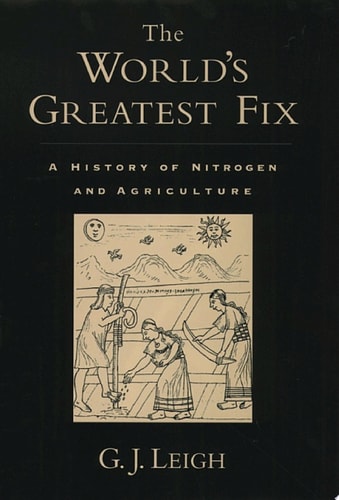
World's Greatest Fix: A History of Nitrogen and Agriculture
0
0
As an Amazon Associate and affiliate partner, Menrva Books earns from qualifying purchases. Learn more
Author Description
In the tradition of Jared Diamond's Guns, Germs, and Steel, this gives the very early history of how human ingenuity overcame the risk of famine through productive agriculture. Starting with a layman's guide to the chemistry of nitrogen fixation, the book goes on to show how humans emerged from nomadic lifestyles and began developing towns and settlements. When they for the first time began planting the same fields year after year, they noticed quickly the need to ensure soil fertility. But how? The method they came up with is still in use to this day.
Menrva's Summary
THE THESIS
This book investigates the historical development of nitrogen fixation and its foundational role in enabling permanent human settlement and agricultural productivity. G. J. Leigh, a chemist, utilizes his technical background to bridge the gap between molecular science and human history. He argues that the transition from nomadic existence to sedentary civilization was contingent upon the human ability to manage soil fertility through nitrogen management. The text provides a framework for understanding how early agricultural techniques evolved into the systems that sustain modern global populations.
THE SCOPE MAP
What You Will Find
- A layman's introduction to the chemical principles of nitrogen fixation.
- Historical analysis of the transition from nomadic hunter-gatherer societies to permanent agricultural settlements.
- Examination of early soil management techniques and their long-term impact on land fertility.
- Discussion of the relationship between agricultural innovation and the growth of human towns and cities.
THE AUTHORITY PERSPECTIVE
Readers frequently note the accessible nature of the chemical explanations provided by the author. Experts highlight this as a useful synthesis for those interested in the intersection of environmental history and agricultural science.
Page Count:
0
Publication Date:
2004-01-01
Publisher:
Oxford University Press, Incorporated
ISBN-10:
0198037074
ISBN-13:
9780198037071
Non-Fiction
Science
History
Chemistry
Agriculture
Community Tags
Similar Books