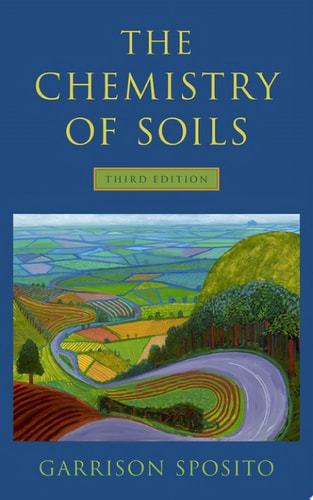
The Chemistry of Soils
0
0
As an Amazon Associate and affiliate partner, Menrva Books earns from qualifying purchases. Learn more
Author Description
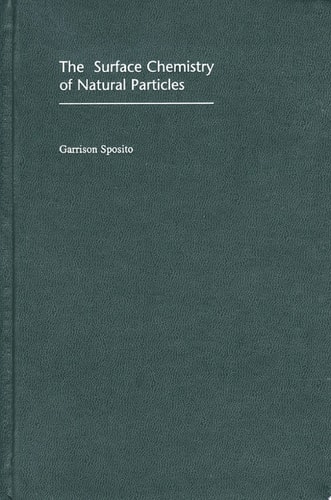
The second edition of The Chemistry of Soils, published in 2008, has been used as a main text in soil-science courses across the world, and the book is widely cited as a reference for researchers in geoscience, agriculture, and ecology. The book introduces soil into its context within geoscience and chemistry, addresses the effects of global climate change on soil, and provides insight into the chemical behavior of pollutants in soils. Since 2008, the field of soil science has developed in three key ways that Sposito addresses in this third edition. For one, research related to the Critical Zone (the material extending downward from vegetation canopy to groundwater) has undergone widespread reorganization as it becomes better understood as a key resource to human life. Secondly, scientists have greatly increased their understanding of how organic matter in soil functions in chemical reactions. Finally, the study of microorganisms as they relate to soil science has significantly expanded.The new edition is still be comprised of twelve chapters, introducing students to the principal components of soil, discussing a wide range of chemical reactions, and surveying important human applications. The chapters also contain completely revised annotated reading lists and problem sets.
Menrva's Summary
THE THESIS
This text investigates the fundamental chemical principles governing soil behavior and its critical role within the Earth's ecosystem. Garrison Sposito, a prominent scholar in soil chemistry, utilizes his extensive academic background to synthesize complex geochemical data. The book provides a rigorous framework for understanding soil as a dynamic chemical system, integrating recent advancements in Critical Zone research, organic matter functionality, and microbial interactions.
THE SCOPE MAP
What You Will Find
- Comprehensive analysis of soil components and chemical reaction kinetics.
- Updated research on the Critical Zone and its importance to human life.
- Detailed examination of pollutant behavior and environmental chemistry.
- Revised problem sets and annotated reading lists for pedagogical application.
Scope Limits
- The text focuses primarily on chemical and geochemical processes rather than biological taxonomy or agricultural management practices.
- It assumes a foundational understanding of chemistry and geoscience, limiting its accessibility for absolute beginners.
THE AUTHORITY PERSPECTIVE
Experts and academics recognize this work as a foundational text for university-level soil science curricula. Readers frequently note the high level of technical density, which makes it a standard reference for researchers and advanced students in the field.
Page Count:
272
Publication Date:
2016-11-21
Publisher:
Oxford University Press
ISBN-10:
0190630884
ISBN-13:
9780190630881
Science
Agriculture
Soil Science
Earth Sciences
Chemistry
Trades & Technology
Geoscience
Ecology
Geology
Soil Chemistry
Community Tags
Other Editions(5)

Similar Books






Reader Comments
Share Your Thoughts
No comments yet. Be the first to share your thoughts!