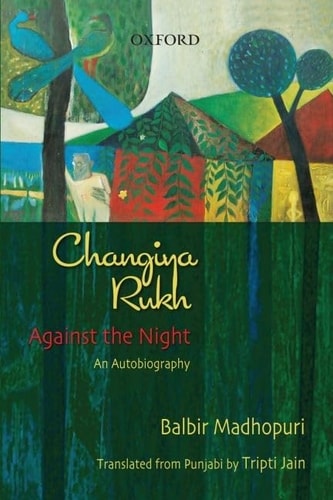
The Lopped Tree: Chhangya Rukh
0
0
As an Amazon Associate and affiliate partner, Menrva Books earns from qualifying purchases. Learn more
Author Description
Chhaangya Rukh as the title of Balbir Madhopuri's autobiography is significant. It means a tree lopped from the top, slashed and dwarfed. Madhopuri uses it as a metaphor for the Dalit or an 'untouchable' Indian whose potential for growth has been 'robbed by the Hindu social order'. Significantly, the lopped tree also denotes its inherent and defiant resilience that brings forth fresh branches and leaves.Set in the village of Madhopuri in Punjab, Chhaangya Rukh traces the social history of the Dalit community in Punjab and brings out the caste relations constructed on prejudice and inequality. But Madhopuri's vision is able to capture and sensitively portray the lot of the Dalits often living on the fringes of society in other parts of the country. Writing with honesty and sincere objectivity, Madhopuri recounts the bleakness of life despite all constitutional and legislative measures. A saga of triumph, this real life story relates a Dalit's angst of deprivation, social exclusion, and humiliation, as well as of resistance, achievement, and hope. This volume also includes a perceptive Introduction by Harish Puri.
Menrva's Summary
THE THESIS
How does the systemic oppression of the Hindu social order shape the life and identity of a Dalit individual in rural Punjab? Balbir Madhopuri utilizes his personal history as a lens to examine the broader socio-political landscape of caste-based discrimination in India. By documenting his own experiences of exclusion and eventual achievement, he argues that the Dalit community possesses an inherent resilience that persists despite institutionalized prejudice and economic deprivation.
THE SCOPE MAP
What You Will Find
- A detailed social history of the Dalit community in the Punjab region.
- An analysis of the impact of the Hindu social order on individual growth and societal status.
- First-hand accounts of systemic humiliation, social exclusion, and the struggle for dignity.
- A critical examination of the effectiveness of constitutional and legislative measures regarding caste inequality.
THE AUTHORITY PERSPECTIVE
Critics and scholars identify this work as a foundational text for understanding the intersection of personal narrative and Dalit sociology. Readers frequently note the stark, objective prose that balances the bleak realities of caste discrimination with a narrative of personal triumph and hope.
Page Count:
224
Publication Date:
2010-06-01
Publisher:
Oxford University Press
ISBN-10:
0198065507
ISBN-13:
9780198065500
Memoir
History
Autobiography
Biography
Dalits
Dalit Studies
Social Science
Authors biography
Authors Indic
Editors
Community Tags
Similar Books