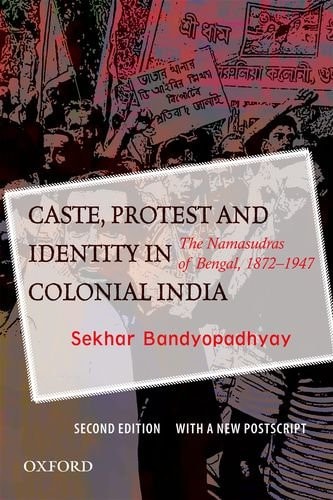
Caste, Protest and Identity in Colonial India: The Namasudras of Bengal, 1872-1947
0
0
As an Amazon Associate and affiliate partner, Menrva Books earns from qualifying purchases. Learn more
Author Description
The Namasudras of Bengal present a curious case. From being the largest Hindu caste group in Bengal and a census-defined community in 1872, they disintegrated after the Partition of India in 1947. Under the banner of the Matua Mahasangha, the group assumed political significance, again, in West Bengal's embattled political arena in 2010-11. This book chronologically delineates the critical moments in the history of the Namasudras. It examines their influence in nationalist and local politics from the 1870s to the 1930s to their appropriation into larger political groups like the Congress, the Hindu Mahasabha, and Kisan Sabhas after Independence. Exploring the transient nature of caste in modern India, this volume discusses the fracturing of caste solidarities along class lines, and the creation of competing and contesting religious and national identities. The new postscript introduces a contemporary perspective to this classic study and analyses the reasons for the disintegration of the Namasudras as a political entity after the Partition. Sekhar Bandyopadhyay also evaluates the implications of their recent resurgence and their role in the 2011 assembly elections.
Menrva's Summary
THE THESIS
This book investigates the historical trajectory of the Namasudra community in Bengal, examining how they navigated caste identity, political mobilization, and social fragmentation from the late nineteenth century through the post-Partition era. Sekhar Bandyopadhyay, a professor of history at Victoria University of Wellington and a Fellow of the Royal Society of New Zealand, utilizes extensive archival research and census data to construct this analysis. He argues that the Namasudras' political evolution reflects the broader, shifting nature of caste solidarities in modern India, particularly as they intersected with nationalist movements and class-based divisions.
THE SCOPE MAP
What You Will Find
- A chronological history of the Namasudra community from 1872 to 1947.
- An analysis of the Matua Mahasangha as a vehicle for political and social organization.
- Examination of the impact of the Partition of India on community cohesion and identity.
- A postscript evaluating the resurgence of Namasudra political influence in the 2011 West Bengal assembly elections.
THE AUTHORITY PERSPECTIVE
Scholars and historians recognize this work as a foundational study on the intersection of caste and political identity in colonial and post-colonial Bengal. Readers frequently note the academic rigor and the depth of the author's archival research, making it a standard text for those studying South Asian social history.
Page Count:
360
Publication Date:
2011-11-16
Publisher:
Oxford University Press
ISBN-10:
0198075960
ISBN-13:
9780198075967
Politics
History
Colonial History
Caste Studies
India
Sociology
Community Tags
Similar Books