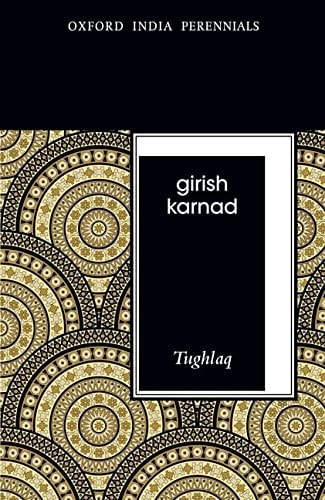
Tughlaq
0
0
As an Amazon Associate and affiliate partner, Menrva Books earns from qualifying purchases. Learn more
Author Description
Muhammad Bin Tughlaq, who ruled from Delhi in the fourteenth century, was a man of many dimensions. A well-read scholar of the arts, theology, and philosophy, a brilliant calligraphist, a mystic, as well as a poet, it is the 'madness' that earned him the epithet 'Mad Muhammad', that Karnad explores in the play.Using history and myth in equal measure, Karnad delves into the psyche of Muhammad to understand and interpret the rationale behind his whimsical actions. Operating at both symbolic and metaphoric levels, the action of the play is closely paralleled with 'contemporary' political and social events.The new Prologue by Karnad recounts the personal history behind the genesis of the play as well as its afterlife-the many productions and general reception. With an Introduction by U.R. Ananthamurthy and an essay by Aparna Dharwadker, this Oxford India Perennials edition is the testimony of Tughlaq's enduring influence even after four decades of its first publication.
Menrva's Summary
THE PULSE
The play centers on the erratic and controversial reign of the fourteenth-century Sultan Muhammad Bin Tughlaq, whose complex psyche drives the narrative toward inevitable political collapse. Karnad presents the Sultan as a multifaceted intellectual—a scholar, poet, and mystic—whose idealistic visions clash violently with the harsh realities of his empire. The narrative follows Tughlaq’s descent into perceived madness as he attempts to implement radical reforms, facing opposition from religious factions, political rivals, and his own disillusioned subjects. Written as a play, the work utilizes a non-linear exploration of historical events to mirror the instability of the Sultan's rule. The structure forces the audience to confront the tension between the Sultan's philosophical intentions and the brutal consequences of his governance.
INSIDE THE PAGES
- Exploration of the intersection between historical fact and mythic interpretation
- Use of the Sultan as a metaphor for contemporary political instability
- Examination of the psychological toll of absolute power
- Integration of philosophical and theological discourse within dialogue
- Symbolic representation of the gap between idealism and pragmatism
- Focus on the tension between the ruler and the ruled
- Inclusion of a prologue detailing the play's genesis and production history
- Analysis of the character's dual nature as both scholar and tyrant
THE COLLECTIVE ECHO
Readers and critics frequently highlight the play's effectiveness in using historical allegory to critique modern political systems. Discussion often centers on the nuanced portrayal of Tughlaq, who is depicted not merely as a madman but as a tragic figure trapped by his own intellect. The pacing is noted for its sharp, intellectual intensity, balancing character-driven monologues with the chaotic momentum of the Sultan's failing administration. Many scholars emphasize the work's enduring relevance, noting that its exploration of power and disillusionment remains a cornerstone of twentieth-century Indian drama.
Page Count:
144
Publication Date:
2012-08-01
Publisher:
Oxford University Press
ISBN-10:
0198077130
ISBN-13:
9780198077138
Drama
Historical
Indian
Plays
Dramatic works
Political fiction
Community Tags
Similar Books