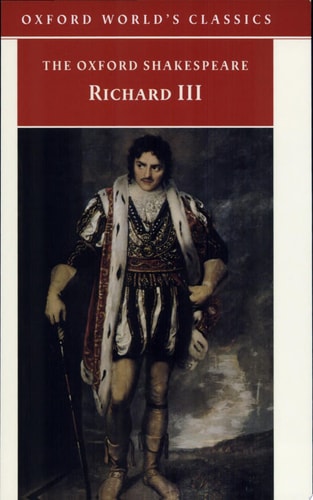
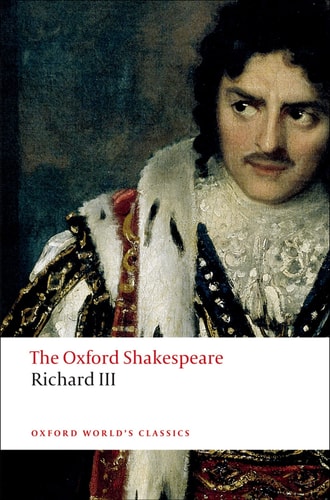
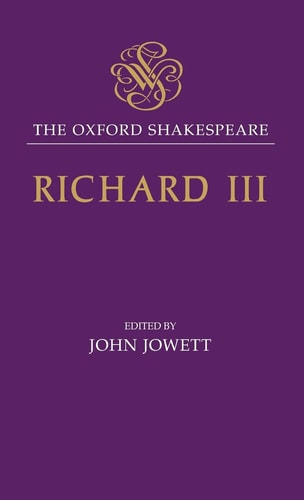
The Tragedy of King Richard III
0
0
As an Amazon Associate and affiliate partner, Menrva Books earns from qualifying purchases. Learn more
Author Description
Richard III is one of Shakespeare's most popular plays on the stage and has been adapted successfully for film. This new and innovative edition recognizes the play's pre-eminence as a performance work: a perspective that informs every aspect of the editing. Challenging traditional practice, the text is based on the 1597 Quarto which, brings us closest to the play as it would have been staged in Shakespeare's theater. The introduction, which is illustrated, explores the long performance history from Shakespeare's time to the present. The commentary gives detailed explanation of matters of language, staging, text, and historical and cultural contexts, providing coverage that is both carefully balanced and alert to nuance of meaning.Documentation of the extensive textual variants is organized for maximum clarity: the readings of the Folio and the Quarto are presented in separate sections, and more specific information is given at the back of the book. Appendices also include selected passages from the main source and a special index of actors and other theatrical personnel.
Menrva's Summary
THE PULSE
Richard, Duke of Gloucester, initiates a ruthless campaign of manipulation and murder to seize the English throne from his own kin. Driven by a physical deformity and a profound sense of alienation, Richard navigates the treacherous political landscape of the Wars of the Roses. He employs deception, psychological warfare, and calculated violence to eliminate rivals and family members who stand between him and the crown. The narrative follows his rapid ascent to power and the subsequent erosion of his support as his paranoia and tyranny alienate his allies. The play utilizes a dramatic framework that highlights the protagonist's direct address to the audience, revealing his internal machinations and cynical worldview.
INSIDE THE PAGES
- Soliloquies providing direct insight into the protagonist's motivations
- Exploration of the intersection between political ambition and moral corruption
- Use of dramatic irony to heighten tension during courtly interactions
- Portrayal of the cyclical nature of violence and retribution
- Symbolic use of omens, curses, and prophetic language
- Contrast between the protagonist's public persona and private cruelty
- Examination of the legitimacy of monarchical power
- Pacing that accelerates as the protagonist's control over events begins to falter
THE COLLECTIVE ECHO
Discussion often centers on the charismatic yet villainous nature of Richard, who remains one of the most compelling figures in the dramatic canon. Readers frequently highlight the play's rapid pacing and the effectiveness of its dark, cynical humor in establishing the protagonist's dominance. Critics often examine the historical versus the theatrical representation of the king, noting how the play functions as a study of power and political maneuvering. The work is widely recognized for its influence on the development of the tragic archetype and continues to be a staple of both academic study and theatrical performance.
Page Count:
414
Publication Date:
2001-05-17
Publisher:
Oxford University Press
ISBN-10:
0192839934
ISBN-13:
9780192839930
Drama
English literature
Plays
Classic Literature
Dramatic works
Tragedy
Historical
Community Tags
Other Editions(3)
Similar Books