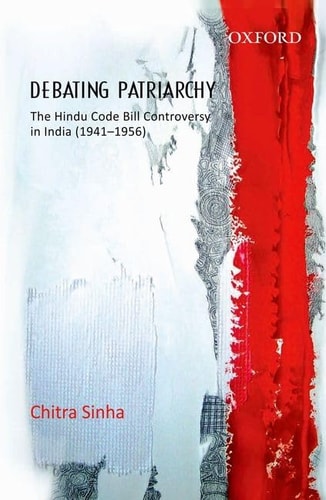
Debating Patriarchy: The Hindu Code Bill Controversy in India (1941-1956)
0
0
As an Amazon Associate and affiliate partner, Menrva Books earns from qualifying purchases. Learn more
Author Description
The book explores a significant episode of Indian social history, the Hindu Code Bill controversy that stirred the Indian social consciousness in the mid-twentieth century. Revisiting the communicative processes surrounding the reform of Hindu customary laws relating to marriage, divorce, succession, adoption and maintenance, the book provides an in-depth account of the intense debate that took place in and outside the legislature involving political groups, social associations, religious organizations, legal associations, and the women's movement. Placing the debate in a historical continuum, the author tracess the genesis of the Hindu Code Bill by exploring the linkages of late eighteenth century initiatives of colonial administration, the efforts of eighteenth century social reformers, and the contribution of Indian national movement as well as women's organizations in early twentieth century. The book analyses the relationship of discourses in the public and legislative spheres and emphases the role of Nehru, Ambedkar, B.N. Rau and other prominent personalities in the promotion of gender justice. The book argues that while effective implementation of enabling legal provisions were impeded by deeply entrenched patriarchal structures in Independent India, the debate contributed towards a gradual transformation of the Indian social consciousness, thus contributing towards gender justice in Indian society.This book will interest scholars, researchers, and students of law, modern Indian history, and gender studies. It will also appeal to general readers.
Menrva's Summary
THE THESIS
This book investigates the complex legislative and social struggle surrounding the Hindu Code Bill, questioning how mid-twentieth-century Indian society navigated the tension between traditional patriarchal structures and the push for gender-equitable legal reform. Chitra Sinha, a scholar of modern Indian history, utilizes a wide array of legislative records, organizational archives, and public discourse from 1941 to 1956 to construct her argument. She posits that while the immediate implementation of these laws faced significant resistance, the prolonged debate served as a catalyst for shifting social consciousness regarding women's rights in India. The work highlights the pivotal roles played by figures such as Jawaharlal Nehru and B.R. Ambedkar in steering these reforms through a fractured political landscape.
THE SCOPE MAP
What You Will Find
- A detailed historical analysis of the Hindu Code Bill controversy spanning from 1941 to 1956.
- Examination of the interplay between colonial-era legal initiatives and post-independence legislative reform.
- Primary source evidence drawn from parliamentary debates, social association records, and the discourse of the women's movement.
- An assessment of the influence of key political and legal figures on the evolution of gender justice in India.
THE AUTHORITY PERSPECTIVE
Experts recognize this work as a comprehensive examination of the intersection between law and social reform in post-colonial India. Readers frequently note the academic rigor of the research, which provides a foundational understanding for students of history and gender studies.
Page Count:
312
Publication Date:
2012-11-09
Publisher:
Oxford University Press
ISBN-10:
0198078943
ISBN-13:
9780198078944
History
Domestic Relations
Hindu Law
Hindus
Law Reform
Sociology
Patriarchy
Law india
India
Law
Gender Studies
Community Tags
Similar Books