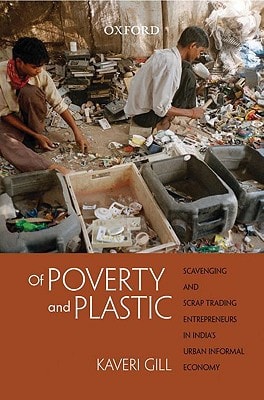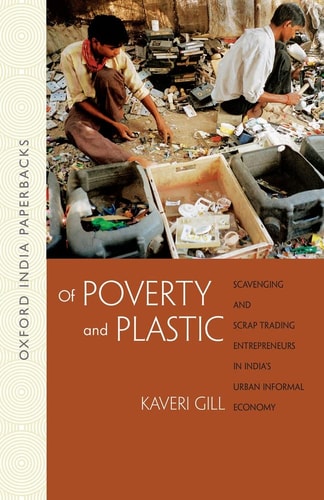
Of Poverty and Plastic: Scavenging and Scrap Trading Entrepreneurs in India's Urban Informal Economy
0
0
As an Amazon Associate and affiliate partner, Menrva Books earns from qualifying purchases. Learn more
Author Description
This volume applies the interdisciplinary 'field economics' approach to poverty analysis. The work is based on extensive fieldwork in the pre-urban edge of the sprawling metropolis of Delhi It assesses the economic, social, and political institutions and processes that structure the well-being, agency, and activities of the poor who are waste scavengers and involved with plastic recycling.Using a mix of survey and ethnographic data, it tells the complete story of how the waste picker at the lowest level of the chain fares in comparison to other kinds of occupational groups engaged in different parts of the scavenging and recycling chain, as well as in other parts of the informal economy. It focuses on the following themes: how occupational choices are dictated by low caste status; how these groups negotiate and surmount market failures and state failures to create a viable informal economy supporting numerous livelihoods and businesses; and how these groups gain or lose from patronage links at the level of the state government and national political parties.
Menrva's Summary
THE THESIS
This volume investigates the economic, social, and political structures governing the lives and livelihoods of waste scavengers and plastic recyclers within India's urban informal economy. Kaveri Gill utilizes an interdisciplinary 'field economics' framework to analyze how individuals at the lowest levels of the waste management chain navigate systemic market and state failures. By integrating extensive fieldwork from Delhi with survey and ethnographic data, the author examines how caste status, patronage networks, and institutional barriers dictate occupational choices and economic outcomes for the urban poor.
THE SCOPE MAP
What You Will Find
- Analysis of the economic and social institutions shaping the lives of waste pickers in Delhi.
- Comparative study of various occupational groups within the scavenging and recycling supply chain.
- Examination of the intersection between caste identity and labor market participation.
- Evaluation of how informal workers negotiate patronage links with state and national political entities.
THE AUTHORITY PERSPECTIVE
Experts recognize this work as a significant contribution to development economics, particularly for its granular focus on the informal sector in India. Readers frequently note the academic density of the prose and the effectiveness of the mixed-methods approach in providing a comprehensive view of urban poverty.
Page Count:
308
Publication Date:
2012-11-09
Publisher:
Oxford University Press
ISBN-10:
0198085508
ISBN-13:
9780198085508
Economics
India
Sociology
Urban Studies
Poverty