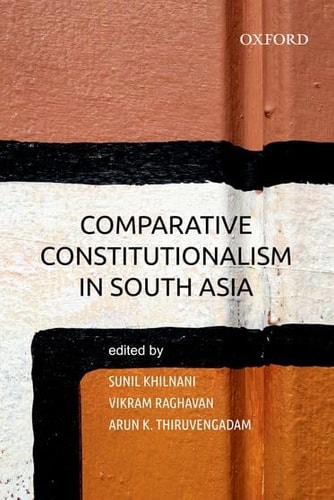
Comparative Constitutionalism in South Asia
0
0
As an Amazon Associate and affiliate partner, Menrva Books earns from qualifying purchases. Learn more
Author Description
The countries of South Asia share a colonial past, have common cultural and civilizational connections, and share some common elements in their constitutional systems, governance structures, and legal systems. Yet despite these attributes, South Asian countries have had differing political and constitutional experiences and comparative constitutional law has not systematically evolved in this region.This volume, the first of its kind in scope, addresses this issue. It points out that in several cases exchanges at the judicial level have already resulted in borrowing of constitutional concepts and legal principles between South Asian countries. There is, however, considerable potential for greater trans-constitutional and judicial borrowing within South Asia. Moreover, the scope for comparative regional borrowings goes beyond the judiciary or the appellate legal profession and can also be shared and exchanged by other entities, including legislatures, independent regulatory agencies, and non-governmental organizations. The essays in this volume bring together the various common elements that are already present in the constitutions and governance structures of South Asian countries and explore new ways to answer critical questions from a comparative perspective.Due to a lack of any previous study of this nature, this volume has the potential to become the best introduction to the field of South Asian constitutional law. It will be immensely useful to scholars and teachers of law, politics, modern history, and development studies as well as lawyers, judges, and policymakers with an interest in India and other South Asian countries.
Menrva's Summary
THE THESIS
This volume investigates the potential for systematic comparative constitutional law within South Asia by examining shared colonial legacies, governance structures, and legal frameworks. Editor Sunil Khilnani compiles a series of essays that analyze how regional judicial and legislative entities currently exchange legal principles and constitutional concepts. The work argues that despite divergent political histories, there exists a significant, underutilized opportunity for trans-constitutional borrowing among South Asian nations to address contemporary governance challenges.
THE SCOPE MAP
What You Will Find
- Comparative analysis of constitutional systems across South Asian nations.
- Examination of judicial borrowing and the exchange of legal principles.
- Discussion of the role of legislatures and regulatory agencies in regional legal development.
- Exploration of commonalities in governance structures derived from shared colonial history.
THE AUTHORITY PERSPECTIVE
Experts identify this volume as a foundational text for those studying the intersection of law and politics in the South Asian context. Readers frequently note the academic density of the prose, which serves as a primary resource for scholars, judges, and policymakers interested in regional legal evolution.
Page Count:
401
Publication Date:
2013-01-01
Publisher:
FisicalBook
ISBN-10:
0198081766
ISBN-13:
9780198081760
History
Governance
Law
Constitutional Law
Community Tags
Similar Books