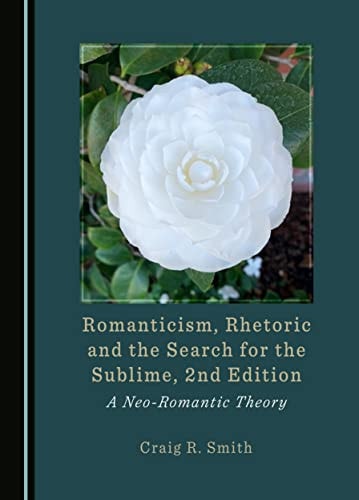
Romanticism, Rhetoric and the Search for the Sublime, 2nd Edition
0
0
As an Amazon Associate and affiliate partner, Menrva Books earns from qualifying purchases. Learn more
Author Description
Relying on the author's established expertise in rhetoric and political communication, this book re-contextualizes Romantic rhetorical theory from the late 18th and early 19th centuries to provide a foundation for a Neo-Romantic rhetorical theory for our own time. In the process, it uses a unique methodology to correct misconceptions about the rhetorical theories of many writers. Using a dialectical approach, the early chapters trace Romanticism through its opposition to the industrial revolution and the Enlightenment, back through Humanism and its opposition to Scholasticism, to its roots in St. Augustine's writing. These chapters include a revisionist analysis of the church's treatment of Galileo in the course of showing how difficult it was for scientific study to be accepted in Scholastic circles. The study goes on to argue that Jean-Jacques Rousseau, David Hume, and Edmund Burke were bridge figures to the Romantic Era. This move throws new light on exemplary painters, composers, writers and orators of the Romantic Era, who are examined in chapters eight and nine. Chapter ten focuses on Percy Bysshe Shelley and his development of the rhetorical poem, and thereby provides a new genre in the Romantic catalogue. Chapter Eleven turns to the Romantic rhetorical theories of Hugh Blair and Thomas De Quincey to empower those seeking to save the environment. The concluding chapter then synthesizes their theories with relevant contemporary rhetorical theories thereby constructing a Neo-Romantic theory for our own time. In the process, the book links the Romantics' love of nature to the current environmental crisis.
Menrva's Summary
THE THESIS
This book re-contextualizes Romantic rhetorical theory to establish a Neo-Romantic rhetorical theory for the present day. Drawing on the author's expertise in rhetoric and political communication, the work examines Romantic rhetorical theory from the late 18th and early 19th centuries. It employs a unique methodology to correct misconceptions about the rhetorical theories of various writers, tracing Romanticism's lineage from its opposition to the industrial revolution and Enlightenment, back through Humanism and Scholasticism, to St. Augustine. The study analyzes key figures like Rousseau, Hume, and Burke as transitional figures, and then explores exemplary painters, composers, writers, and orators of the Romantic Era.
THE SCOPE MAP
- A revisionist analysis of the church's treatment of Galileo within the context of Scholasticism.
- An examination of Jean-Jacques Rousseau, David Hume, and Edmund Burke as bridge figures to the Romantic Era.
- Analysis of exemplary painters, composers, writers, and orators of the Romantic Era.
- A focus on Percy Bysshe Shelley and the development of the rhetorical poem.
- An exploration of Hugh Blair and Thomas De Quincey's rhetorical theories in relation to environmentalism.
- Synthesis of Romantic theories with contemporary rhetorical theories to construct a Neo-Romantic theory for the present time.
- Links between the Romantics' love of nature and the current environmental crisis.
THE AUTHORITY PERSPECTIVE
The book is presented as a scholarly work by an established expert in rhetoric and political communication. Its methodology is described as unique and dialectical, aiming to correct existing misconceptions about Romantic rhetorical theory. The reception is inferred to be academic, focusing on its contribution to rhetorical theory and its interdisciplinary approach, connecting literary and artistic movements with philosophical and environmental concerns.
Page Count:
355
Publication Date:
2023-03-01
Publisher:
Cambridge Scholars Publishing
ISBN-10:
152759291X
ISBN-13:
9781527592919
Non-Fiction
History
Philosophy
Rhetoric
Romanticism
Literary Criticism
Community Tags
Similar Books