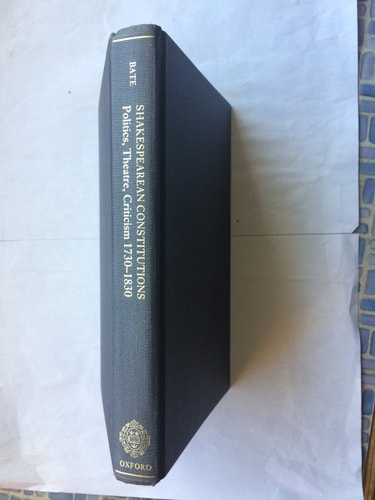
Shakespearean Constitutions: Politics, Theater, Criticism 1730-1830
0
0
As an Amazon Associate and affiliate partner, Menrva Books earns from qualifying purchases. Learn more
Author Description
The first serious study of Shakespeare's pervasive presence in English cultural life in the 18th and early 19th centuries, this work examines how during times of political stress both "establishment" and "radical" culture tend to compete for possession of the national poet. In a analysis, Bate reveals this process at work in the brilliant political satires of Gillray, the Cruikshanks and other caricaturists, and in the performances and interpretation of the plays of the period, including such phenomena as Garrick's Jubilee and Boydell's picture gallery. At the very heart of the argument is Hazlitt, bringing Shakespeare to bear on contemporary life, responding to Edmund Kean in the theater, and developing radically new readings of the plays.
Menrva's Summary
THE THESIS
This work investigates how Shakespeare’s cultural authority was contested and utilized by both radical and establishment factions in England between 1730 and 1830. Jonathan Bate, a scholar of English literature, utilizes a wide array of historical evidence—including political satire, theatrical records, and critical essays—to demonstrate how the national poet became a symbolic battleground during periods of intense political instability. The text argues that the interpretation of Shakespeare’s plays was inextricably linked to the evolving political identity of the British nation during this transformative century.
THE SCOPE MAP
What You Will Find
- Analysis of political caricatures by Gillray and the Cruikshanks.
- Examination of theatrical events such as Garrick’s Jubilee and the Boydell Shakespeare Gallery.
- Evaluation of William Hazlitt’s critical responses to Edmund Kean’s performances.
- Exploration of the intersection between dramatic interpretation and national political discourse.
THE AUTHORITY PERSPECTIVE
Scholars recognize this work as a foundational study for understanding the reception history of Shakespeare in the eighteenth and nineteenth centuries. Readers frequently note the academic density of the prose and the author's meticulous attention to the political climate of the era.
Page Count:
250
Publication Date:
1989-01-01
Publisher:
Clarendon Press
ISBN-10:
0198117493
ISBN-13:
9780198117490
History
Political History
Theater History
Literary Criticism
Shakespeare
Community Tags
Similar Books