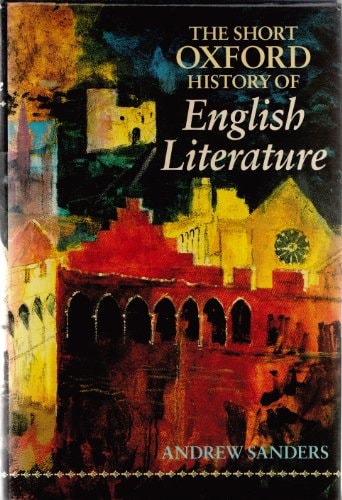
The Short Oxford History of English Literature
0
0
As an Amazon Associate and affiliate partner, Menrva Books earns from qualifying purchases. Learn more
Author Description
Poets' Corner in Westminster Abbey, Andrew Sanders notes, had its start by accident. The first writer entombed there (long before it was known by today's name) was Geoffrey Chaucer--so honored not for his works, but because he had lived nearby and had distant connections to the crown. But Chaucer was lionized by future generations, especially by Edmund Spenser, who was the next poet to take his place in the Corner. Over time, more men of letters followed (including Ben Jonson, John Dryden, and Charles Dickens), as England turned this corner of the Abbey into a tribute to its writers. The growth of Poets' Corner, Sanders writes, mirrors the conscious efforts of writers to create the British literary tradition--the physical expression of the emerging canon.In The Short Oxford History of English Literature, Sanders conducts us on a tour through the living past behind the stone effigies of Poets' Corner--capturing the vast history of the literature of the British isles in a single, fascinating narrative. Starting with the early Anglo-Saxon period, he ranges right up to the present, with individual chapters on Old and Middle English literature, the Renaissance, the seventeenth and eighteenth centuries, the Romantics, Victorian and Edwardian Literature, Modernism, and post-war writing. Throughout, the author combines concise analyses of individual works and authors with an overarching sense of how they interacted in a single literary tradition. The dramas of Shakespeare, for example, have long since eclipsed those of his contemporaries Kyd and Marlowe; but Sanders reminds us of the "symbiotic relationship" between the Bard and his rivals, especially Marlowe. He goes on to crisply assess the interaction of Shakespeare's plays with the politics and emerging nationalism of the period. Sanders applies this sensitivity to the relationship between literature and larger social issues elsewhere as well; after providing an outstanding critical examination of Dickens's novels, he f
Menrva's Summary
THE THESIS
This work investigates the evolution of the British literary canon by examining the historical, social, and political contexts that shaped the development of English literature from the Anglo-Saxon period to the modern era. Andrew Sanders, a scholar of English literature, utilizes a chronological framework to synthesize centuries of creative output into a cohesive narrative. He argues that the literary tradition is not merely a collection of isolated texts but a dynamic, symbiotic process influenced by the interplay between authors, their contemporaries, and the shifting national identity of the British Isles.
THE SCOPE MAP
What You Will Find
- A comprehensive chronological survey spanning from Old English literature to post-war contemporary writing.
- Critical analysis of major literary movements including the Renaissance, Romanticism, Victorianism, and Modernism.
- Examination of the symbiotic relationships between canonical figures like Shakespeare and their lesser-known contemporaries.
- Contextual assessments linking literary production to broader social issues, political shifts, and the emergence of nationalism.
THE AUTHORITY PERSPECTIVE
Experts and students frequently cite this volume as a reliable, high-level overview of the English literary tradition. Readers often note the density of the prose, which balances academic rigor with a narrative structure suitable for those seeking a broad historical perspective on the subject.
Page Count:
688
Publication Date:
1994-05-26
Publisher:
Oxford University Press
ISBN-10:
0198112025
ISBN-13:
9780198112020
History
British & Irish
British literature
Criticism & Theory
Reference
Literary Criticism
English literature
Community Tags
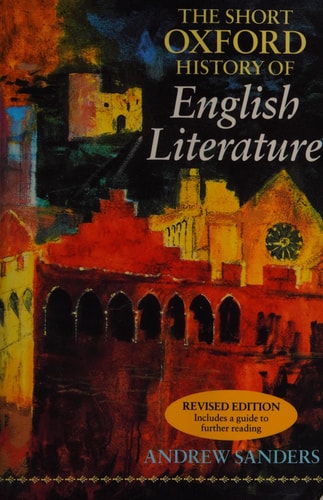
Other Editions(2)
Similar Books


Reader Comments
Share Your Thoughts
No comments yet. Be the first to share your thoughts!