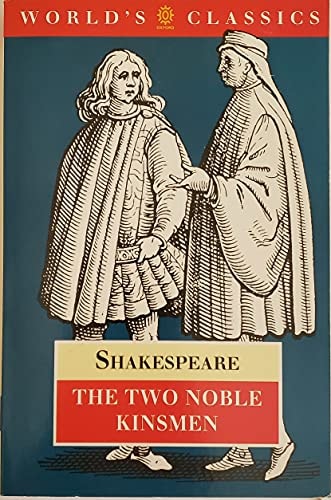
The Two Noble Kinsmen
0
0
As an Amazon Associate and affiliate partner, Menrva Books earns from qualifying purchases. Learn more
Author Description
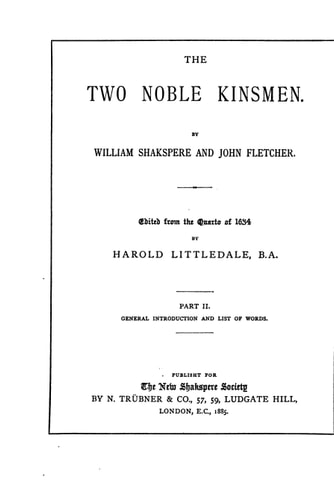
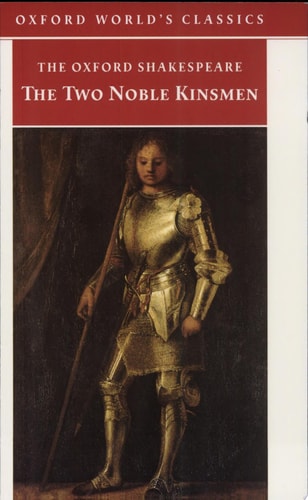
Based on Chaucer's Knight's Tale, The Two Noble Kinsmen was written at the end of Shakespeare's career, as a collaboration with the rising young dramatist John Fletcher. Neglected until recently by directors and teachers, the play deserves to be better known for its moving dramatization of the conflict of love and friendship. This new edition, compiled by distinguished scholar Eugene M. Waith, offers helpful new material on the play's authenticity as a work of Shakespeare, his collaboration with Fletcher, the relevance to the play of the contemporary ideals of chivalry and friendship, and its limited but increasing stage history. Based on the Quarto of 1634, Waith's edition also sets out to clarify the stage directions, address problems of mislineation, and provide useful guides to unfamiliar words, stage business, allusions, and textual problems.
Menrva's Summary
THE PULSE
Two cousins, Palamon and Arcite, find their deep bond of friendship shattered when they both fall in love with the same woman, Emilia. The narrative follows the two kinsmen as they navigate the competing demands of chivalric loyalty and romantic desire, leading to a high-stakes tournament that will determine their fates. Set against a backdrop of ancient Greek mythology and courtly tradition, the play utilizes a collaborative structure that blends Shakespearean character depth with Fletcherian dramatic pacing. The conflict forces the protagonists to confront the fragility of their brotherhood when faced with an impossible choice between honor and passion.
INSIDE THE PAGES
- Exploration of the tension between male friendship and romantic love
- Incorporation of chivalric codes and courtly ideals
- Use of blank verse and dramatic soliloquies
- Integration of mythological references and classical motifs
- Collaborative authorship between William Shakespeare and John Fletcher
- Focus on the psychological conflict of the two protagonists
- Inclusion of ritualistic and ceremonial stage elements
- Examination of the consequences of obsession and rivalry
THE COLLECTIVE ECHO
Discussion often centers on the distinct stylistic shifts between the scenes attributed to Shakespeare and those written by Fletcher. Readers frequently highlight the play's complex treatment of love, noting that it avoids simple resolutions in favor of a more ambiguous exploration of human desire. Critics often examine how the work reflects the late-career preoccupations of its authors regarding the nature of loyalty and the constraints of societal expectations. The play is increasingly recognized for its thematic depth, with many scholars arguing that it provides a significant look at the evolution of early modern drama. Readers interested in the mechanics of collaborative writing find the text particularly useful for understanding how two distinct voices can merge to create a cohesive dramatic experience.
Page Count:
248
Publication Date:
1989-09-28
Publisher:
Clarendon Press
ISBN-10:
0198129394
ISBN-13:
9780198129394
Drama
Romance
classic
Dramatic works
Plays
Renaissance
Community Tags
Other Editions(3)
Similar Books