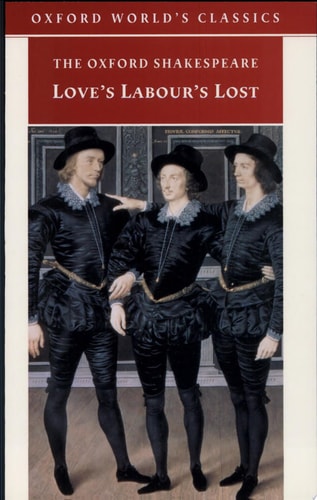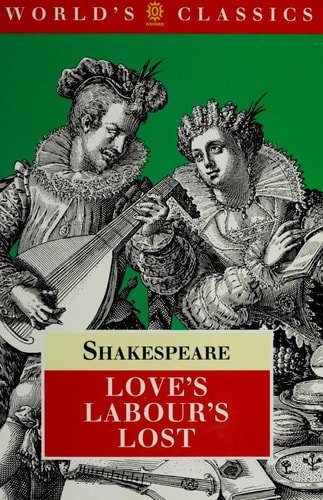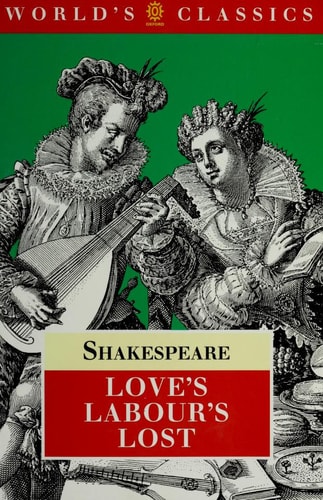
Love's Labour's Lost
0
0
As an Amazon Associate and affiliate partner, Menrva Books earns from qualifying purchases. Learn more
Author Description
Love's Labour's Lost, now recognized as one of the most delightful and stageworthy of Shakespeare's comedies, came into its own both on the stage and in critical esteem only during the 1930s and 1940s--after nearly three hundred years of neglect by the theater and misuse by critics. In this new critical edition, Hibbard pays particular attention to this process of rehabilitation. Based on the quarto of 1598, and drawing on recent scholarly analysis, he proposes that the quarto goes way back, probably by way of a "lost" quarto, to an authorial manuscript representing the play in a state prior to "fair copy." He offers numerous new readings of difficult and disputed passages, and a helpful commentary to the play's scintillating language.
Menrva's Summary
THE PULSE
The King of Navarre and his three companions swear a solemn oath to dedicate themselves to study and fasting for three years, only to have their resolve immediately tested by the arrival of the Princess of France and her ladies. The protagonists attempt to maintain their ascetic vow while navigating the sudden, overwhelming intrusion of romantic attraction. Their efforts are complicated by a series of elaborate wordplay, mistaken identities, and the rigid social expectations of the court. The narrative unfolds through a series of witty exchanges and structured poetic verse that highlights the tension between intellectual ambition and human desire.
INSIDE THE PAGES
- Intricate wordplay and linguistic puns
- Exploration of the conflict between academic study and romantic pursuit
- Use of courtly love conventions
- Satirical portrayal of pedantry and affectation
- Shift from comedic artifice to a more somber, realistic conclusion
- Ensemble cast featuring distinct archetypes
- Rhythmic verse and prose dialogue
- Thematic focus on the limitations of human promises
THE COLLECTIVE ECHO
Readers and critics frequently highlight the play's linguistic complexity and its status as one of the most intellectually demanding of the early comedies. Discussion often centers on the shift in tone during the final act, which challenges the traditional expectations of the genre. Scholars appreciate the meticulous attention to the 1598 quarto text provided in this edition, which aids in navigating the dense, archaic vocabulary. The play is widely regarded as a sophisticated examination of rhetoric and the performative nature of love, making it a frequent subject of academic analysis.
Page Count:
272
Publication Date:
1990-05-24
Publisher:
Oxford University Press
ISBN-10:
0198129475
ISBN-13:
9780198129479
Drama
classic
Plays
Comedy
Princesses
Shakespeare