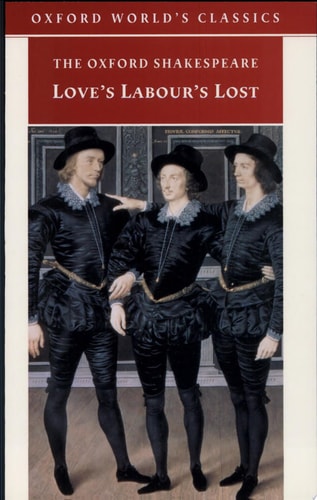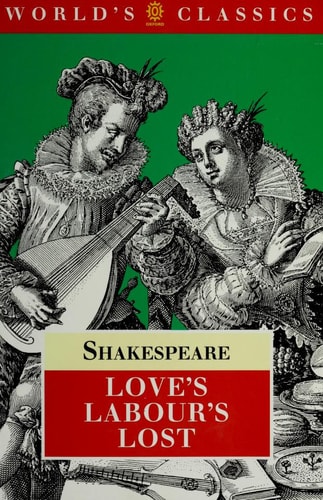
Love's Labour's Lost
0
0
As an Amazon Associate and affiliate partner, Menrva Books earns from qualifying purchases. Learn more
Author Description
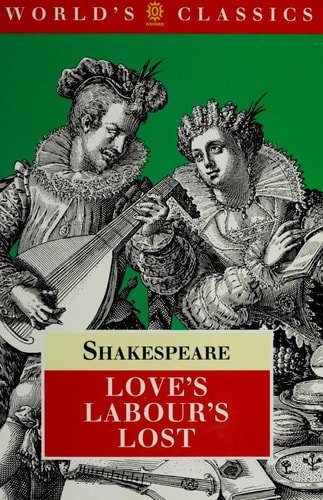
Love's Labour's Lost, now recognized as one of the most delightful and stageworthy of Shakespeare's comedies, came into its own both on the stage and in critical esteem only during the 1930s and 1940s--after nearly three hundred years of neglect by the theater and misuse by critics. In this new critical edition, Hibbard pays particular attention to this process of rehabilitation. Based on the quarto of 1598, and drawing on recent scholarly analysis, he proposes that the quarto goes back, probably by way of a "lost" quarto, to an authorial manuscript that represents the play in a state prior to "fair copy." He offers numerous original readings of difficult and disputed passages, and a helpful commentary to the play's scintillating language.
Menrva's Summary
THE PULSE
The King of Navarre and his three companions swear a solemn oath to abstain from the company of women for three years to focus on academic study, only to have their resolve immediately tested by the arrival of the Princess of France and her ladies.
The protagonists attempt to maintain their intellectual isolation, but their commitment is challenged by the arrival of the French delegation, forcing them to navigate the tension between their ascetic vows and their burgeoning romantic interests. The narrative framework utilizes a series of witty verbal exchanges and elaborate social games to expose the hypocrisy of the men's self-imposed constraints. The play operates within the rigid social hierarchies of a royal court, where language itself serves as both a weapon and a shield for the characters. The structure follows a classic comedic arc, culminating in a sudden shift that forces the characters to confront the reality of time and mortality.
INSIDE THE PAGES
- Extensive use of wordplay, puns, and elaborate rhetorical devices
- Exploration of the conflict between academic study and romantic pursuit
- Satirical portrayal of pedantry and affected speech patterns
- Integration of subplots involving lower-class characters to mirror aristocratic folly
- Use of verse and prose to distinguish character status and mood
- Focus on the performative nature of courtship and social interaction
- Inclusion of a final, somber shift that subverts traditional comedic expectations
- Emphasis on the limitations of language in expressing genuine human emotion
THE COLLECTIVE ECHO
Readers and critics frequently highlight the play's linguistic complexity, noting that it stands as one of the most intellectually demanding comedies in the canon. Discussion often centers on the shift from the lighthearted, witty banter of the early acts to the unexpected, melancholic conclusion that leaves many romantic threads unresolved. Scholars emphasize the play's focus on the artifice of language, noting how the characters use rhetoric to mask their true intentions or to perform their social roles. The work is often praised for its structural ingenuity and its refusal to provide a conventional, tidy resolution for its protagonists. Many readers find the play's focus on the failure of intellectual vows to be a compelling commentary on the human condition.
Page Count:
272
Publication Date:
1990-07-26
Publisher:
Oxford University Press
ISBN-10:
0192819402
ISBN-13:
9780192819406
Drama
Comedy
Renaissance
Classical
Plays