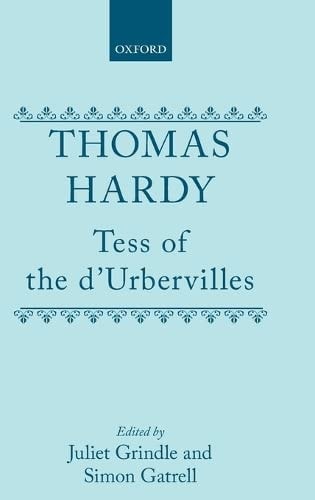
Tess of the D'Urbervilles
0
0
As an Amazon Associate and affiliate partner, Menrva Books earns from qualifying purchases. Learn more
Author Description
Hardy's novel tells the story of how John and Joan Durbeyfield became convinced that they are descended from the ancient family of d'Ubervilles. They encourage their daughter Tess to cement a connection with the Stoke-d'Uberville family of local gentry (who it turns out are themselves not entitled to the illustrious name) and she is raped by their son, the unprincipled Alec. It is a connection that returns to haunt her after she has married the pure parson's son Angel Clare. Tess first appeared in a serialized—and bowdlerized—form in The Graphic in 1891. A Pure Woman Faithfully Presented, as Hardy subtitled the work, represented a direct challenge to conventional notions of sexuality and femininity—and, though conventions have radically changed in the past century, the character of Tess has remained a challenging one. In her introduction Maier argues that we should not see Tess merely as a passive victim; she suggests that a combina
Menrva's Summary
THE PULSE
The discovery of an ancestral link to a noble family sets in motion a series of events that forces Tess Durbeyfield into a struggle for survival against rigid social expectations and personal betrayal. Tess seeks to improve her family's standing, only to be exploited by the predatory Alec d'Urberville, an encounter that permanently alters her social and moral trajectory. Her subsequent attempt to build a new life with Angel Clare is undermined by the weight of her past and the unforgiving nature of Victorian morality. The narrative utilizes a third-person omniscient perspective to examine the interplay between individual agency and the crushing influence of fate and societal judgment.
INSIDE THE PAGES
- Detailed descriptions of the Wessex landscape as a reflection of character internal states
- Exploration of the double standards regarding female purity and sexual morality
- Use of fatalistic irony to underscore the protagonist's lack of control over her circumstances
- Critique of the rigid class structures prevalent in late nineteenth-century England
- Symbolism involving the contrast between natural innocence and industrial corruption
- Examination of the conflict between traditional religious values and personal ethics
- Non-linear progression of social status through the Durbeyfield family's shifting fortunes
- Focus on the psychological impact of public shame and social ostracization
THE COLLECTIVE ECHO
Readers and critics frequently analyze the work as a profound critique of the Victorian social order and its treatment of women. Discussion often centers on the tension between Tess as a victim of circumstance and her capacity for independent moral decision-making. The atmospheric prose is noted for its ability to evoke the harsh realities of rural life while maintaining a sense of impending tragedy. Many observers highlight the effectiveness of Hardy's characterization of Angel Clare, whose idealism often clashes with the reality of Tess's situation. The novel remains a subject of debate regarding its subtitle and the author's intent to challenge the era's conventional notions of femininity.
Page Count:
754
Publication Date:
1983-04-21
Publisher:
Oxford University Press
ISBN-10:
0198124953
ISBN-13:
9780198124955
Romance
Fiction
Victorian
Tragedy
Wessex England
classic
Social Realism
England
Community Tags
Other Editions(50)

Independently published
2024
Default edition
Canterbury Classics
2022
DIGITAL FIRE
2021
Repro India Limited
2021

Independently Published
2021

Repro India Limited
2020

Independently Published
2018

CreateSpace Independent Publishing Platform
2018

Pan Macmillan
2018

Amazon Digital Services LLC - KDP Print US
2018

Independently Published
2018

CreateSpace Independent Publishing Platform
2018

Independently Published
2018

CreateSpace Independent Publishing Platform
2018

CreateSpace Independent Publishing Platform
2017

CreateSpace Independent Publishing Platform
2017

CreateSpace Independent Publishing Platform
2017
CreateSpace Independent Publishing Platform
2017

CreateSpace Independent Publishing Platform
2017

Blurb, Incorporated
2017

Vintage
2017

CreateSpace Independent Publishing Platform
2016

CreateSpace Independent Publishing Platform
2016

CreateSpace Independent Publishing Platform
2016

CreateSpace Independent Publishing Platform
2016
Oxford University Press España, S.A.
2016
Oxford University Press
2016

BBC Audiobooks America
2013

W. F. Howes Limited
2012
Oxford University Press
2012
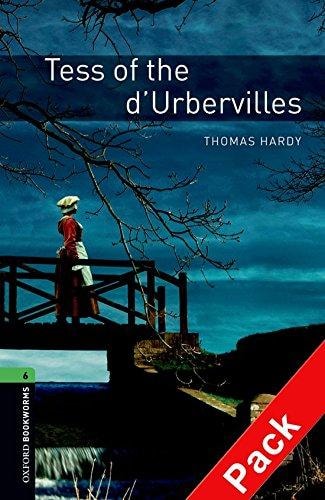
Oxford University Press España, S.A.
2009

Penguin USA, Inc.
2009

eBooksLib
2009

Penguin USA, Inc.
2009
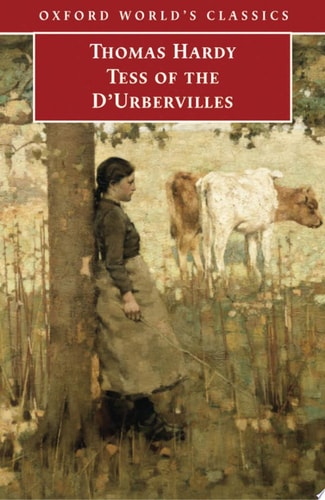
Oxford University Press
2008
Oxford University Press
2008
Oxford University Press
2008

Crescent Moon Publishing
2008

Penguin Random House
2008

Penguin Books
2008

Penguin Adult
2007

Oxford University Press
2006

Rupa & Co.
2005

Houghton Mifflin Harcourt Publishing Company
2004

Penguin
2002

Oxford University Press
1998
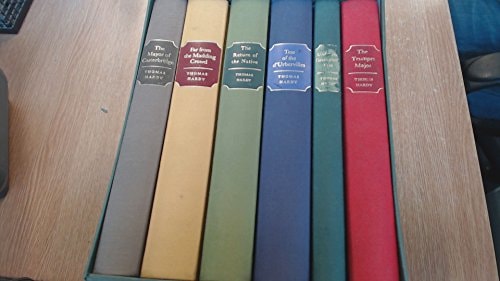
The Folio Society
1993
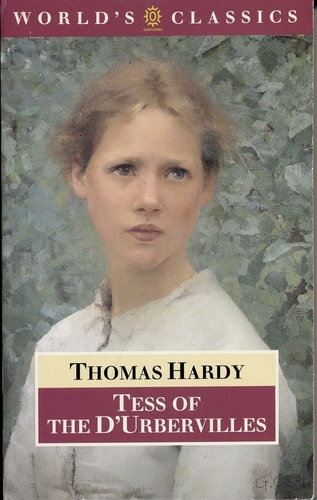
Oxford University Press
1988
Oxford University Press
1983

Airmont Publishing Company, Incorporated
1963
Similar Books

Reader Comments
Share Your Thoughts
No comments yet. Be the first to share your thoughts!