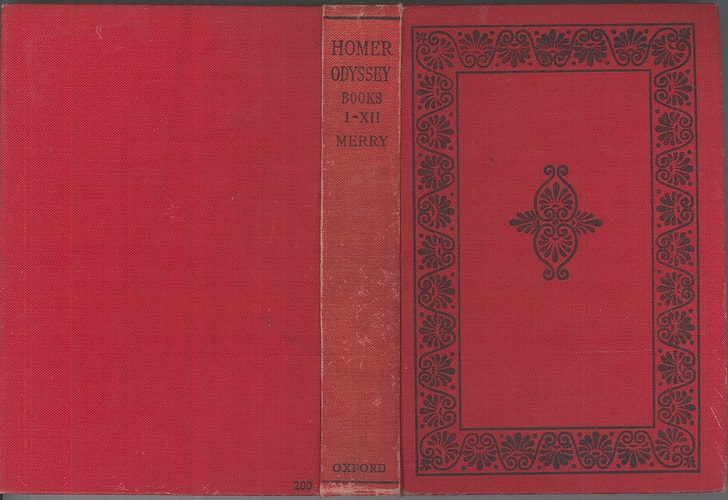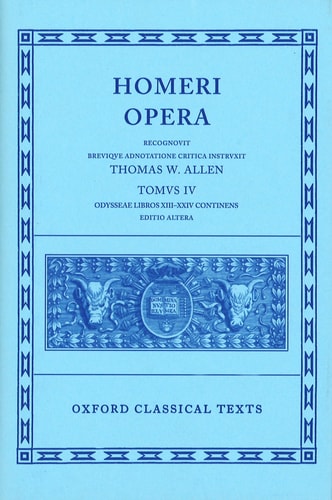
The Odyssey: Books 13-24
0
0
As an Amazon Associate and affiliate partner, Menrva Books earns from qualifying purchases. Learn more
Author Description
By its evocation of a real or imaged heroic age, its contrasts of character and its variety of adventure, above all by its sheer narrative power, the Odyssey has won and preserved its place among the greatest tales in the world. It tells of Odysseus' adventurous wanderings as he returns from the long war at Troy to his home in the Greek island of Ithaca, where his wife Penelope and his son Telemachus have been waiting for him for twenty years. He meets a one-eyed giant, Polyphemus the Cyclops; he visits the underworld; he faces the terrible monsters Scylla and Charybdis; he extricates himself from the charms of Circe and Calypso. After these and numerous other legendary encounters he finally reaches home, where, disguised as a beggar, he begins to plan revenge on the suitors who have for years been besieging Penelope and feasting on his own meat and wine with insolent impunity.
Menrva's Summary
THE PULSE
Odysseus returns to the shores of Ithaca, initiating a calculated reclamation of his household from the suitors who have usurped his authority. Disguised as a beggar by the goddess Athena, the protagonist must navigate the social and political landscape of his own home to assess the loyalty of his servants and the arrogance of his enemies. The narrative follows a non-linear progression of recognition and retribution, constrained by the divine intervention of the Olympian gods and the rigid social codes of the heroic age. The text utilizes the traditional dactylic hexameter framework, emphasizing the tension between the hero's internal restraint and his external need for violent justice.
INSIDE THE PAGES
- Utilization of epic similes to illustrate character motivations and environmental hazards
- Frequent divine intervention by Athena and Poseidon influencing mortal outcomes
- Use of dramatic irony as Odysseus interacts with suitors while disguised
- Exploration of the concept of xenia, or the Greek code of hospitality
- Inclusion of recognition scenes involving Eumaeus, Telemachus, and Penelope
- Detailed descriptions of the bow contest and the subsequent slaughter
- Focus on the restoration of order within the domestic sphere of Ithaca
- Integration of oral tradition motifs and epithets characteristic of Homeric verse
THE COLLECTIVE ECHO
Readers and scholars frequently analyze the shift in tone from the fantastical wanderings of the earlier books to the grounded, domestic tension of the final half. Discussion often centers on the psychological complexity of Penelope and the moral ambiguity surrounding the brutal retribution exacted upon the suitors. Critics highlight the structural precision of the homecoming, noting how the narrative builds toward the final confrontation through a series of incremental revelations. The text is widely regarded as a foundational study in the mechanics of suspense and the resolution of long-form epic narratives.
Page Count:
240
Publication Date:
1922-02-22
Publisher:
Clarendon Press
ISBN-10:
0198145322
ISBN-13:
9780198145325
Adventure
Ancient Greek
Mythology
Epic Poetry
classic
Community Tags
Similar Books