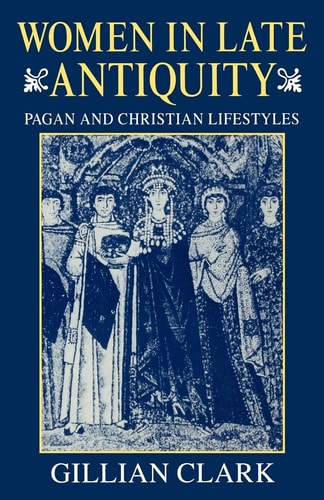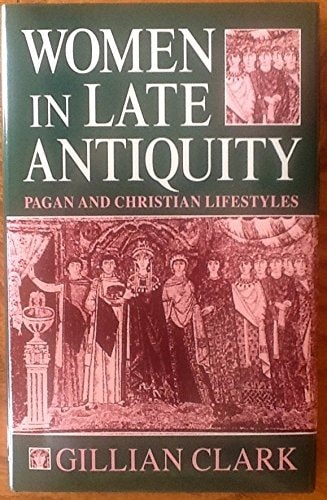
Women in Late Antiquity: Pagan and Christian Lifestyles
0
0
As an Amazon Associate and affiliate partner, Menrva Books earns from qualifying purchases. Learn more
Author Description
This book bridges a gap between two traditional disciplines. Since the 1970s, there has been a remarkable outpouring of work on women in antiquity, but women in late antiquity (3rd-6th centuries A.D.) have been far less studied. Classicists have been more concerned with the first two centuries A.D., and theologians have been interested in New Testament, rather than patristic, teaching about women or its social and cultural setting. In this book, Clark offers an introduction to the basic conditions of life for women: marriage, divorce, celibacy and prostitution; legal constraints and protection; child-bearing, health care, and medical theories; housing, housework, and clothes; and the general assumptions about female nature which were discarded at need. Christian and non-Christian literature, art, and archaeology are used to exemplify both the practicalities of life and the prevailing "discourses" of the ancient world.
Menrva's Summary
THE THESIS
This book investigates the social, legal, and cultural conditions governing the lives of women during the transition from the classical world to the early medieval period. Gillian Clark, a scholar of late antiquity, synthesizes diverse evidence to challenge the academic neglect of women between the 3rd and 6th centuries A.D. By examining the intersection of pagan and Christian traditions, she argues that the lived experiences of women were shaped by a complex interplay of medical theory, legal frameworks, and evolving religious discourse.
THE SCOPE MAP
What You Will Find
- Analysis of legal constraints, marriage, divorce, and celibacy practices.
- Examination of domestic life, including housing, clothing, and household management.
- Integration of archaeological findings, art history, and patristic literature.
- Investigation into medical theories regarding female health and child-bearing.
THE AUTHORITY PERSPECTIVE
Scholars frequently cite this work as a foundational text for bridging the gap between classical studies and patristic theology. It is widely recognized for its accessible yet rigorous approach to the social history of late antiquity.
Page Count:
188
Publication Date:
1993-07-29
Publisher:
Oxford University Press
ISBN-10:
0198146752
ISBN-13:
9780198146759
History
Late Antiquity
Social History