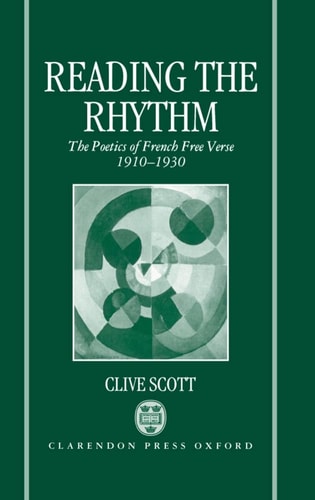
Reading the Rhythm: The Poetics of French Free Verse 1910-1930
0
0
As an Amazon Associate and affiliate partner, Menrva Books earns from qualifying purchases. Learn more
Author Description
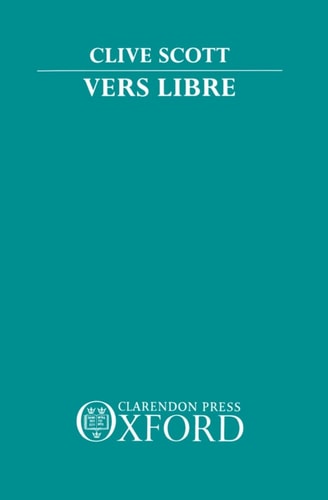
We are still a long way from knowing how to read the rhythms of free verse, a poetry which has been largely neglected by metrical theory. Clive Scott's readable and scholarly study indicates the strategies of reading needed in order to do justice to free verse's rhythmic versatility. The core of the book is an analysis of key twentieth-century poets and poems, including Perse's Éloges; Cendrars's Prose du Transsibérien, Dix-neuf poemes élastiques, and Documentaires; Apollinaire's Calligrammes; Supervielle's Gravitations; and Reverdy's Sources du vent. He also looks at contemporary trends in the visual arts--Cubism, Futurism, Orphism, photography--to illuminate free verse's perceptual models and discusses the theme of travel and movement.
Menrva's Summary
THE THESIS
This study investigates the neglected metrical structures of French free verse to establish a new framework for reading and interpreting its rhythmic versatility. Clive Scott, a scholar of French poetry, addresses the historical lack of theoretical engagement with free verse by proposing specific reading strategies. He utilizes a comparative approach, drawing on both textual analysis of major twentieth-century poets and the aesthetic principles of contemporary visual arts to define the mechanics of this poetic form.
THE SCOPE MAP
What You Will Find
- Analysis of key works by Perse, Cendrars, Apollinaire, Supervielle, and Reverdy
- Examination of the intersection between poetry and visual movements like Cubism, Futurism, and Orphism
- Exploration of thematic motifs including travel and physical movement
- Methodological strategies for interpreting rhythmic versatility in non-metrical verse
THE AUTHORITY PERSPECTIVE
Scholars and students of French modernism frequently cite this work as a foundational text for understanding the transition from traditional metrics to free verse. Readers often note the academic density of the prose, which provides a rigorous analytical approach to the complexities of early twentieth-century poetic form.
Page Count:
304
Publication Date:
1993-09-16
Publisher:
Clarendon Press
ISBN-10:
0198158823
ISBN-13:
9780198158820
Poetry
French Poetry
French literature
Modernism
Literary theory
Free Verse
Literary Criticism
Community Tags
Similar Books