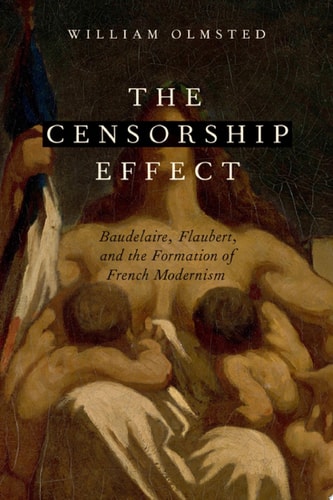
The Censorship Effect: Baudelaire, Flaubert, and the Formation of French Modernism
0
0
As an Amazon Associate and affiliate partner, Menrva Books earns from qualifying purchases. Learn more
Author Description
In 1857 the trials of Flaubert and Baudelaire for offending against religion and public morality drew attention to the features we now associate with literary modernism; but instead of winning praise for their innovations they were indicted for "ideological crimes." With the passage of time the offenses have been forgotten and the innovations inserted into a triumphal narrative about the rise of modernism.Far from manifesting the autonomy proclaimed by modernism's defenders, though, Flaubert's and Baudelaire's works remain enmeshed in their socio-historical contexts. To that end, The Censorship Effect argues that the stylistic features that prompted the criminal indictment of Madame Bovary and Les Fleurs du Mal--Flaubert's free indirect style and Baudelaire's multiple poetic personae--were much more the products of an intense struggle with a culture of censorship than they were hallmarks of autonomous or autoreferential works of art. They exhibit signs of self-censorship and collaboration with a regime of ethical and political censorship that not only shaped their very composition but affected their reception and continues to operate in the field of literary criticism. Indeed, as William Olmsted compellingly demonstrates, French modernism begins and remains deeply embedded in a culture of censorship whose proprieties, both literary and social, Baudelaire and Flaubert nevertheless challenged and transgressed.Exploring the censorship effect as it played out for Baudelaire and Flaubert, from their trials to their monuments, The Censorship Effect recaptures some sense of their original anger as well as its ongoing suppression by new orthodoxies and reveals how the effect of censorship has implications beyond Flaubert and Baudelaire, beyond authors, but for us as readers too.
Menrva's Summary
THE THESIS
How did the legal and social pressures of 19th-century censorship actively shape the stylistic innovations of Flaubert and Baudelaire? William Olmsted, a scholar of French literature, challenges the traditional view of modernism as an autonomous artistic movement. He argues that the defining stylistic features of Flaubert’s free indirect style and Baudelaire’s poetic personae were not purely aesthetic choices, but rather strategic responses to a restrictive culture of censorship that forced authors into self-censorship and complex negotiations with state morality.
THE SCOPE MAP
What You Will Find
- Analysis of the 1857 trials of Madame Bovary and Les Fleurs du Mal
- Examination of the relationship between state censorship and literary form
- Investigation into the legacy of these trials within modern literary criticism
Scope Limits
- The study does not provide a comprehensive history of all French censorship laws
- The analysis is focused primarily on Flaubert and Baudelaire rather than a broad survey of all modernist authors
THE AUTHORITY PERSPECTIVE
Scholars recognize this work as a significant intervention in modernist studies, noting its ability to recontextualize canonical texts within their original socio-political constraints. Readers frequently highlight the academic density of the prose and the author's meticulous attention to the intersection of legal history and literary theory.
Page Count:
238
Publication Date:
2016-01-01
Publisher:
Oxford University Press
ISBN-10:
0190493410
ISBN-13:
9780190493417
History
English
Censorship Studies
Literary Criticism
Cultural History
French literature
Censorship
English & College Success
Modernism
Community Tags
Similar Books