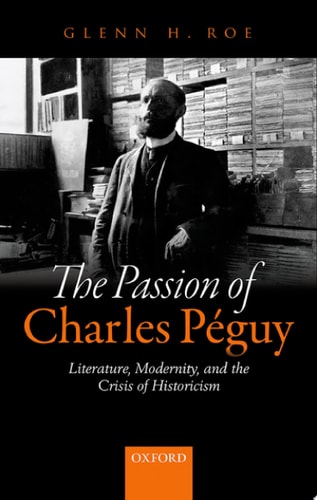
The Passion of Charles Péguy: Literature, Modernity, and the Crisis of Historicism
0
0
As an Amazon Associate and affiliate partner, Menrva Books earns from qualifying purchases. Learn more
Author Description
In many ways, the development of twentieth-century literary criticism and theory can be seen as a prolonged struggle against the pervading influence of nineteenth-century positivist historicism. Anglo-American New Criticism and later French Post-structuralism and Deconstruction are the best-known instances of this conflict. Less widely known, but no less important to contemporary literary studies, are Charles Péguy's earlier debates with French academic historicism in the years leading up to World War One. First examined by Antoine Compagnon in his ground-breaking work La Troisième République des lettres in 1983, it is a period in French literary and cultural history that remains, some thirty years later, largely untreated in English. This book thus addresses an important, albeit relatively unexplored, moment in the development of twentieth-century literary history and theory. By way of Péguy's foundational polemics with modernity and his role in the related 'crisis of historicism', we gain a better understanding of the critical basis from which similar anti-positivist and anti-historicist critiques were later enacted on both sides of the Atlantic. In situating Péguy's passions and polemics within the larger cultural and historical context, Glenn H. Roe invites us to reconsider and re-evaluate Péguy's place among twentieth-century literary figures. Beyond its literary-critical aspects, The Passion of Charles Péguy provides a general view of early twentieth-century debates related to the role of literary studies in modern society, the reform of the French educational system, and the formation of literary history as an academic discipline in both France and abroad.
Menrva's Summary
THE THESIS
This book investigates the intellectual conflict between Charles Péguy and the prevailing positivist historicism of the early twentieth century to understand the origins of modern literary theory. Glenn H. Roe, an academic specialist in French literature and digital humanities, utilizes Péguy’s polemical writings and historical context to argue that these early debates provided the critical foundation for later anti-positivist movements in both France and the Anglo-American world. By examining Péguy’s resistance to academic institutionalization, the author demonstrates how these specific historical tensions shaped the trajectory of twentieth-century literary studies.
THE SCOPE MAP
What You Will Find
- Analysis of French academic historicism in the pre-World War One era.
- Examination of Charles Péguy’s foundational polemics against modernity.
- Discussion of the reform of the French educational system and the professionalization of literary history.
- Comparative insights into the development of literary theory on both sides of the Atlantic.
Scope Limits
- The text focuses primarily on the French intellectual context rather than a comprehensive biography of Péguy.
- It does not provide an exhaustive survey of all twentieth-century literary theories, focusing instead on the anti-historicist lineage.
THE AUTHORITY PERSPECTIVE
Scholars recognize this work as a significant contribution to filling a gap in English-language scholarship regarding the intellectual history of the Third Republic. Readers frequently note the academic density of the prose, which is best suited for researchers and students of literary theory and French cultural history.
Page Count:
272
Publication Date:
2014-01-01
Publisher:
OUP Oxford
ISBN-10:
0191027936
ISBN-13:
9780191027932
History
Philosophy
French literature
Literary Criticism
Academic
Modernism
English & College Success
English
Community Tags
Similar Books