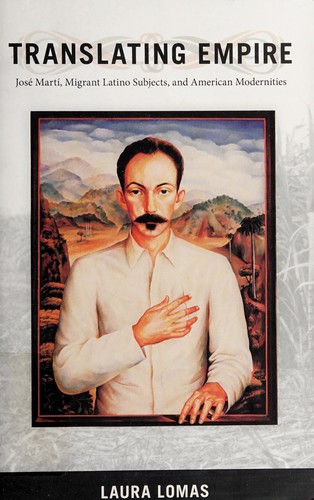
Translating Empire
0
0
As an Amazon Associate and affiliate partner, Menrva Books earns from qualifying purchases. Learn more
Author Description
In Translating Empire, Laura Lomas uncovers how late nineteenth-century Latino migrant writers developed a prescient critique of U.S. imperialism, one that prefigures many of the concerns about empire, race, and postcolonial subjectivity animating American studies today. During the 1880s and early 1890s, the Cuban journalist, poet, and revolutionary Jose Marti and other Latino migrants living in New York City translated North American literary and cultural texts into Spanish. Lomas reads the canonical literature and popular culture of the United States in the Gilded Age through the eyes of Marti and his fellow editors, activists, orators, and poets. In doing so, she reveals how, in the process of translating Anglo-American culture into a Latino American idiom, the Latino migrant writers invented a modernist aesthetics to criticize U.S. expansionism and expose Anglo stereotypes of Latino Americans."--BOOK JACKET.
Menrva's Summary
THE THESIS
This book investigates how late nineteenth-century Latino migrant writers critiqued U.S. imperialism through their translation of American texts. Laura Lomas examines the work of Cuban journalist Jose Marti and other Latino migrants in New York City during the 1880s and early 1890s. By translating North American literary and cultural works into Spanish, these writers developed a modernist aesthetic. This aesthetic served as a critique of U.S. expansionism and exposed Anglo stereotypes of Latino Americans, prefiguring contemporary concerns in American studies.
THE SCOPE MAP
- Analysis of literary and cultural texts translated by Latino migrants in late 19th-century New York City.
- Focus on the work of Jose Marti and his contemporaries.
- Exploration of how translation practices informed a critique of U.S. imperialism.
- Examination of modernist aesthetics developed by migrant writers.
- Exposure of Anglo stereotypes of Latino Americans.
- Connection to contemporary debates in American studies regarding empire, race, and postcolonial subjectivity.
THE AUTHORITY PERSPECTIVE
The book is recognized for its insightful analysis of how Latino migrant writers in the late nineteenth century engaged with and critiqued U.S. imperialism through their translation work. Scholars note its contribution to understanding the development of modernist aesthetics and its relevance to contemporary discussions on American studies, empire, and postcolonial theory. The work is appreciated for its detailed examination of canonical and popular American culture through the lens of these migrant intellectuals. Its prefiguration of modern concerns about empire and subjectivity is a key aspect highlighted in its reception.
Page Count:
379
Publication Date:
2008-01-01
ISBN-10:
0822343428
ISBN-13:
9780822343424
History
Literary Fiction
Art
Non-Fiction
Literary Criticism
American Studies
Community Tags
Similar Books