Unscripted America: Indigenous Languages and the Origins of a Literary Nation
0
0
As an Amazon Associate and affiliate partner, Menrva Books earns from qualifying purchases. Learn more
Author Description
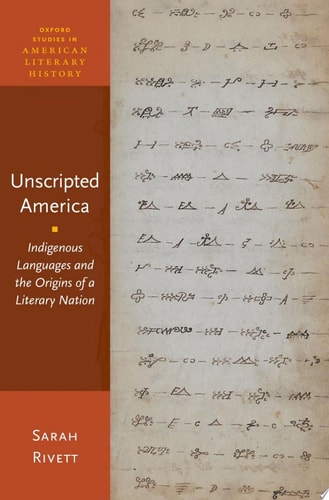
In 1664, French Jesuit Louis Nicolas arrived in Quebec. Upon first hearing Ojibwe, Nicolas observed that he had encountered the most barbaric language in the world--but after listening to and studying approximately fifteen Algonquian languages over a ten-year period, he wrote that he had "discovered all of the secrets of the most beautiful languages in the universe." Unscripted America is a study of how colonists in North America struggled to understand, translate, and interpret Native American languages, and the significance of these languages for theological and cosmological issues such as the origins of Amerindian populations, their relationship to Eurasian and Biblical peoples, and the origins of language itself. Through a close analysis of previously overlooked texts, Unscripted America places American Indian languages within transatlantic intellectual history, while also demonstrating how American letters emerged in the 1810s through 1830s via a complex and hitherto unexplored engagement with the legacies and aesthetic possibilities of indigenous words. Unscripted America contends that what scholars have more traditionally understood through the Romantic ideology of the noble savage, a vessel of antiquity among dying populations, was in fact a palimpsest of still-living indigenous populations whose presence in American literature remains traceable through words. By examining the foundation of the literary nation through language, writing, and literacy, Unscripted America revisits common conceptions regarding "early america" and its origins to demonstrate how the understanding of America developed out of a steadfast connection to American Indians, both past and present.
Menrva's Summary
THE THESIS
This work investigates how the encounter with and interpretation of Indigenous American languages fundamentally shaped the development of early American literature and national identity. Sarah Rivett, a scholar of early American literature and history, utilizes a range of colonial-era texts and linguistic records to argue that American letters were not merely an extension of European traditions, but were deeply influenced by the theological, cosmological, and aesthetic challenges posed by Native American languages. By tracing these linguistic interactions from the 17th century through the 19th century, the author demonstrates that the concept of an American literary nation emerged from a complex, ongoing engagement with Indigenous populations rather than a simple romanticized view of a vanishing people.
THE SCOPE MAP
What You Will Find
- Analysis of colonial-era Jesuit and missionary linguistic records.
- Examination of the 1810s through 1830s as a critical period for the formation of American letters.
- A framework connecting transatlantic intellectual history with local Indigenous linguistic presence.
- Discussion of theological debates regarding the origins of Amerindian populations and their relation to Biblical history.
Scope Limits
- The study focuses primarily on the intersection of language and literature rather than a comprehensive ethnographic history of all Indigenous tribes.
- The analysis is bounded by the specific period of the 17th century through the early 19th century.
THE AUTHORITY PERSPECTIVE
Scholars in the field of early American studies recognize this text as a significant contribution to understanding the linguistic foundations of national literature. Readers frequently note the academic density of the prose and the depth of the archival research presented throughout the chapters.
Page Count:
396
Publication Date:
2017-01-01
Publisher:
Oxford University Press
ISBN-10:
0190492589
ISBN-13:
9780190492588
History
Literary Criticism
Linguistics
English & College Success
Criticism history
Reference
America history
American Studies
New Used & Rental Textbooks
History of the Americas
Language and education
English
Words Language & Grammar
Colonial History
North America
Language And Culture
Languages In Contact
Community Tags
Similar Books