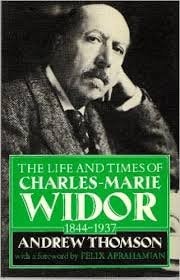
Widor: The Life and Times of Charles-Marie Widor, 1844-1937
0
0
As an Amazon Associate and affiliate partner, Menrva Books earns from qualifying purchases. Learn more
Author Description
Charles-Marie Widor contributed significantly to French music as an organist, composer, conductor, teacher, and writer, yet he was unjustly overshadowed by contemporaries Saint-Saëns, Franck, and Debussy. This comprehensive biography describes his life amid the intellectual and political ferment of the Third Republic and his relations with a variety of musicians, authors, artists, politicians, popes, and kings. Coming at a time of increased interest in Widor's pioneering "symphonic" organ music, the book will also prove fascinating reading for all those interested in the social and political history of nineteenth- and early twentieth- century France.
Menrva's Summary
THE THESIS
This biography investigates the life and professional contributions of Charles-Marie Widor to determine his rightful place within the musical and political landscape of the French Third Republic. Andrew W. Thomson utilizes extensive archival research and historical context to re-evaluate Widor's career as an organist, composer, and educator. The text argues that Widor's influence has been historically obscured by his more famous contemporaries, necessitating a reassessment of his role in shaping French musical culture during a period of significant social change. By situating Widor within the intellectual ferment of his era, the author provides a framework for understanding the intersection of artistic output and political environment.
THE SCOPE MAP
What You Will Find
- Detailed examination of Widor's symphonic organ compositions and pedagogical methods.
- Analysis of the social and political climate of the French Third Republic.
- Documentation of Widor's professional relationships with prominent figures including politicians, artists, and religious leaders.
- Historical overview of the French musical establishment between 1844 and 1937.
THE AUTHORITY PERSPECTIVE
Experts recognize this work as a definitive resource for scholars interested in the organ repertoire and the broader cultural history of late nineteenth-century France. Readers frequently note the academic rigor of the prose and the thoroughness with which Thomson documents the composer's extensive social network.
Page Count:
130
Publication Date:
1990-01-04
Publisher:
Oxford University Press
ISBN-10:
0198161867
ISBN-13:
9780198161868
Biography
History
Music
French History
Community Tags
Similar Books