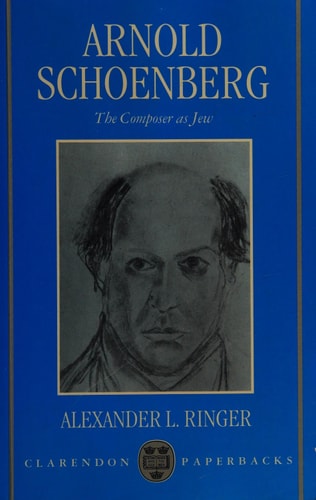
Arnold Schoenberg: The Composer as Jew
0
0
As an Amazon Associate and affiliate partner, Menrva Books earns from qualifying purchases. Learn more
Author Description
Though nominally a Protestant from his official conversion in 1898 to his demonstrative return to Judaism in 1933, Schoenberg proudly retained his Jewish identity all his life and endured the inevitable consequences as the quintessentially Jewish composer of his time. Ringer's sympathetic and perceptive study throws new light on both the esthetic and political ramifications of Schoenberg's spiritual commitment in the tragic historical context of Central European Jewry's ultimate rise and destruction.
Menrva's Summary
THE THESIS
This study investigates the intersection of Arnold Schoenberg's musical innovation and his evolving Jewish identity within the volatile political landscape of early 20th-century Europe. Alexander L. Ringer, a respected musicologist, examines how Schoenberg's religious and cultural commitments informed his compositional output and public life. By analyzing the composer's conversion to Protestantism and his subsequent return to Judaism in 1933, Ringer argues that Schoenberg's work cannot be fully understood without acknowledging his status as a Jewish artist navigating the rise of antisemitism. The text utilizes historical documentation and musical analysis to frame the composer's spiritual trajectory against the backdrop of Central European history.
THE SCOPE MAP
What You Will Find
- Analysis of the relationship between Schoenberg's religious identity and his musical aesthetics.
- Historical context regarding the experience of Central European Jewry during the early 20th century.
- Examination of Schoenberg's public and private writings concerning his Jewish heritage.
- Discussion of the political ramifications of the composer's return to Judaism in 1933.
THE AUTHORITY PERSPECTIVE
Scholars and music historians frequently cite this work as a critical resource for understanding the non-musical influences on Schoenberg's creative process. The text is noted for its balanced approach to integrating biographical detail with broader cultural history.
Page Count:
288
Publication Date:
1993-05-20
Publisher:
Oxford University Press
ISBN-10:
0198163541
ISBN-13:
9780198163541
Music
Biography
History
Judaism
Jewish Studies
Composers
Community Tags
Similar Books