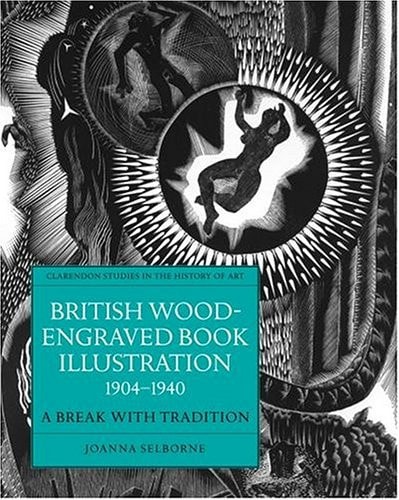
British Wood-Engraved Book Illustration 1904-1940: A Break with Tradition
0
0
As an Amazon Associate and affiliate partner, Menrva Books earns from qualifying purchases. Learn more
Author Description
Twentieth-century British wood-engraved book illustration up to the beginning of World War II was among the most versatile and inventive of the graphic arts. In a climate of typographical renaissance, various wood engravers made a significant impact on the appearance of the printed page, transforming good books into works of art and influencing modern standards of book production. This book reveals the methods by which these pioneering artists broke with nineteenth-century illustrative practices. The author surveys the subject in relation to the cultural and historical background, and within a context of mainstream developments in the visual arts, places emphasis on the working relationships of illustrators with both private presses and commercial publishers.
Menrva's Summary
THE THESIS
This work investigates how British wood-engraved book illustration between 1904 and 1940 fundamentally altered the aesthetic and production standards of the printed page. Joanne Selborne, an expert in the history of graphic arts, examines the shift from nineteenth-century illustrative conventions toward a modern, inventive approach. By analyzing the intersection of cultural history and artistic practice, the author demonstrates how these artists redefined the relationship between text and image during a period of significant typographical evolution.
THE SCOPE MAP
What You Will Find
- Historical analysis of British wood engraving from 1904 to the onset of World War II
- Examination of the collaborative dynamics between illustrators, private presses, and commercial publishers
- Contextualization of graphic arts within the broader landscape of twentieth-century visual arts
- Documentation of the technical and stylistic departure from Victorian illustrative traditions
THE AUTHORITY PERSPECTIVE
Scholars and art historians recognize this text as a definitive resource for understanding the technical and cultural shifts in early twentieth-century British printmaking. The book is frequently cited for its meticulous research into the professional networks that shaped modern book production.
Page Count:
466
Publication Date:
1999-01-28
Publisher:
Oxford University Press
ISBN-10:
019817408X
ISBN-13:
9780198174080
Graphic arts
British History
Art History
Artists Books
Illustration
Illustration of books
Book Design
Community Tags
Similar Books