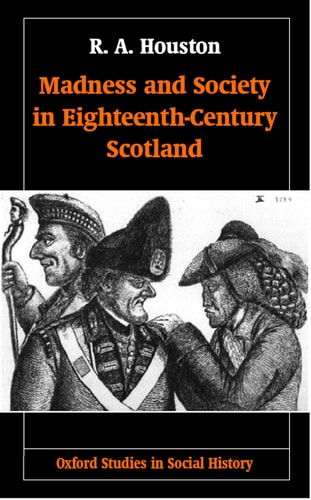
Madness and Society in Eighteenth-century Scotland
0
0
As an Amazon Associate and affiliate partner, Menrva Books earns from qualifying purchases. Learn more
Author Description
How did people view mental health problems in the eighteenth century, and what do the attitudes of ordinary people towards those afflicted tell us about the values of society at that time? Here, Rab Houston draws upon a wide range of contemporary sources including asylum documents, civil and criminal court records, including the written and spoken words of sufferers themselves, to present unique insights into the many issues related to madness. A detailed yet profoundly humane and compassionate study, this book describes the everyday experiences of those suffering mental impairments ranging from idiocy to lunacy and explores the many meanings and implications for society in the eighteenth century.
Menrva's Summary
THE THESIS
This book investigates how eighteenth-century Scottish society perceived and managed mental health conditions, using these attitudes as a lens to understand the broader values and social structures of the era. R. A. Houston, a noted historian of early modern Britain, synthesizes a vast array of archival evidence to challenge monolithic views of historical mental illness. By examining the intersection of legal, medical, and social frameworks, the author argues that the treatment of the mentally impaired was deeply embedded in the community's moral and economic fabric.
THE SCOPE MAP
What You Will Find
- Analysis of asylum documents, civil court records, and criminal proceedings from eighteenth-century Scotland.
- Examination of the lived experiences of individuals categorized under terms ranging from idiocy to lunacy.
- Integration of primary source material, including the direct testimonies and written accounts of those suffering from mental impairments.
- A comprehensive study of the social, legal, and cultural implications of madness within the Scottish Enlightenment context.
THE AUTHORITY PERSPECTIVE
Historians and scholars of social history frequently cite this work for its meticulous archival research and its ability to humanize the historical subjects of mental health studies. The text is recognized as a foundational resource for understanding the complexities of institutional and community care in pre-modern Scotland.
Page Count:
464
Publication Date:
2000-03-16
Publisher:
Clarendon Press
ISBN-10:
0198207875
ISBN-13:
9780198207870
History
Psychology
Mental Illness
Eighteenth Century
Social History
Scotland
Community Tags
Other Editions(3)


Similar Books