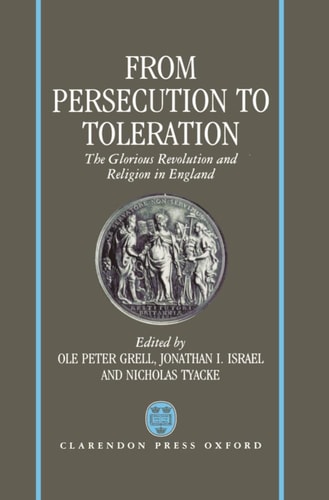
From Persecution to Toleration: The Glorious Revolution and Religion in England
0
0
As an Amazon Associate and affiliate partner, Menrva Books earns from qualifying purchases. Learn more
Author Description
This book reestablishes the importance of religion in the historical assessment of the Glorious Revolution and its consequences. The distinguished scholars who contributed to this volume explore a variety of themes, including the nature of religious dissent, the idea of freedom of conscience, and attitudes towards the Huguenot community. They examine not only Protestant dissent, but also Catholicism, Judaism, and Deism.
Menrva's Summary
THE THESIS
This volume investigates the central role of religious ideology and shifting legislative frameworks in shaping the political outcomes of the Glorious Revolution in England. The authors, including distinguished historians Nicholas Tyacke, Ole Peter Grell, and Jonathan I. Israel, utilize primary source analysis and historical synthesis to argue that the transition from persecution to toleration was a complex, multi-faceted process. By examining the interplay between state authority and various religious groups, the text challenges traditional secular interpretations of this period.
THE SCOPE MAP
What You Will Find
- Analysis of the legislative transition from religious persecution to the Toleration Act.
- Examination of diverse religious groups including Protestants, Catholics, Jews, and Deists.
- Exploration of the Huguenot community and their influence on English religious discourse.
- Discussion of the evolving intellectual concepts of freedom of conscience and dissent.
THE AUTHORITY PERSPECTIVE
Scholars and historians frequently cite this work as a critical contribution to the study of seventeenth-century English religious policy. The text is noted for its academic rigor and its success in re-centering religious debate within the broader narrative of the Glorious Revolution.
Page Count:
456
Publication Date:
1991-07-25
Publisher:
Clarendon Press
ISBN-10:
0198201966
ISBN-13:
9780198201960
History
Religion
Great Britain
British History
Political History
European History
Community Tags
Similar Books