Death in the Victorian Family
0
0
As an Amazon Associate and affiliate partner, Menrva Books earns from qualifying purchases. Learn more
Author Description
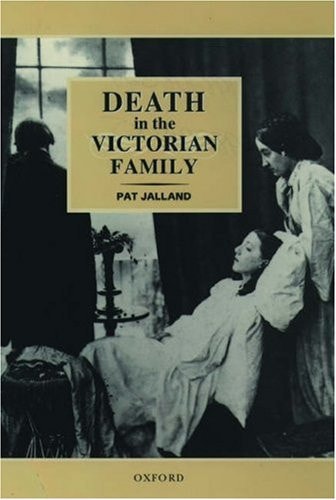
This engrossing book explores family experiences of dying, death, grieving, and mourning in the years between 1830 and 1920. So many Victorian letters, diaries, and death memorials reveal a deep preoccupation with death which is both fascinating and enlightening. Pat Jalland has examined the correspondence, diaries, and death memorials of fifty-five families to show us deathbed scenes of the time, good and bad deaths, the roles of medicine and religion, children's deaths, funerals and cremations, widowhood, and mourning rituals.
Menrva's Summary
THE THESIS
This book investigates the cultural and personal dimensions of mortality, grief, and mourning practices within the Victorian family structure from 1830 to 1920. Pat Jalland, a historian specializing in Victorian social history, utilizes an extensive archive of private correspondence, personal diaries, and commemorative death memorials to reconstruct the lived experience of bereavement. By analyzing the records of fifty-five distinct families, the author constructs a framework that contrasts the idealized 'good death' with the harsh realities of medical limitations and religious anxiety during the nineteenth and early twentieth centuries.
THE SCOPE MAP
What You Will Find
- Analysis of primary source documents including private letters, diaries, and funeral memorials.
- Examination of the evolving roles of medical intervention and religious faith in the deathbed experience.
- Comparative study of mourning rituals, widowhood, and the societal treatment of child mortality.
- Historical overview of the transition from traditional burial practices to the emergence of cremation.
THE AUTHORITY PERSPECTIVE
Historians and scholars frequently cite this work as a definitive study on the private emotional lives of Victorians regarding mortality. The text is recognized for its meticulous use of primary source data to provide a nuanced understanding of historical grief practices.
Page Count:
496
Publication Date:
1996-12-05
Publisher:
Oxford University Press
ISBN-10:
0198201885
ISBN-13:
9780198201885
History
Great Britain
Bereavement
Sociology
Victorian Era
Social History
Social Aspects
Funeral Rites
Community Tags
Similar Books