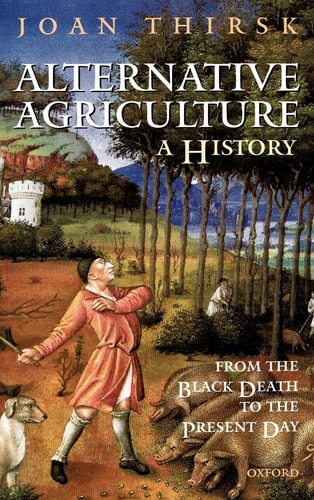
Alternative Agriculture: A History: From the Black Death to the Present Day
0
0
As an Amazon Associate and affiliate partner, Menrva Books earns from qualifying purchases. Learn more
Author Description
People like to believe in a past golden age of "traditional" English countryside, before large farms, machinery, and the destruction of hedgerows changed the landscape forever. Yet crops from the past like flax, hemp, rapeseed, and woad are gradually reappearing in the "modern" countryside. Thirsk reveals how the forces which drive the current interest in alternative forms of agriculture--a glut of mainstream meat and cereal crops, changing patterns of diet, the needs of medicine--have striking parallels with earlier periods of English history, emphasizing that solutions to current problems can still be found in the hard-won experience of people in the past.
Menrva's Summary
THE THESIS
Does the modern movement toward alternative agriculture represent a novel shift, or is it a cyclical return to historical practices necessitated by economic and dietary pressures? Joan Thirsk, a distinguished historian of rural life, utilizes extensive archival research to examine the evolution of English farming from the Black Death through the modern era. She argues that the current diversification of crops and farming methods mirrors historical adaptations to market gluts and changing societal needs, suggesting that past agricultural strategies offer viable solutions for contemporary challenges.
THE SCOPE MAP
What You Will Find
- Historical analysis of crop diversification including flax, hemp, rapeseed, and woad.
- Comparative study of agricultural economic cycles from the 14th century to the present.
- Examination of the relationship between dietary shifts, medical needs, and farming output.
- Evaluation of the impact of market saturation on mainstream meat and cereal production.
THE AUTHORITY PERSPECTIVE
Scholars and historians frequently cite this work as a definitive study on the long-term patterns of English rural economy. Readers often note the academic rigor of the text, which provides a comprehensive framework for understanding how historical agricultural precedents inform modern sustainable farming initiatives.
Page Count:
384
Publication Date:
1997-12-04
Publisher:
Oxford University Press
ISBN-10:
0198206623
ISBN-13:
9780198206620
History
Economics
Social History
Agriculture
Environmental History
Community Tags
Similar Books