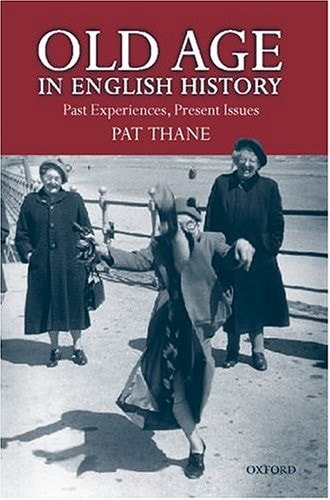
Old Age in English History: Past Experiences, Present Issues
0
0
As an Amazon Associate and affiliate partner, Menrva Books earns from qualifying purchases. Learn more
Author Description
People are now living well into their seventies, eighties, and even beyond. A tribute to medicine, the trend is also a challenge for governments as the costs of healthcare and retirement continue to grow. But is this really a new trend? And is it a serious problem? This history of old age in England challenges many contemporary assumptions about aging and its role in culture. Tracing the experiences of older people back two thousand years, it shows that in fact there were large numbers of vigorous older people in many periods and that they often made important contributions to their families, friends, and society at large. After discussion of the modern experience of old age, when mass retirement has become the norm, the book argues that we can continue to expect the benefits of an aging society to far outweigh the costs.
Menrva's Summary
THE THESIS
This book investigates whether the modern phenomenon of an aging population is truly a novel crisis or a historical continuity that has been misunderstood by contemporary policy makers. Pat Thane, a prominent historian of social policy and aging, utilizes two millennia of English historical records to dismantle the assumption that longevity is a modern burden. By contrasting historical evidence of active, contributing older populations with current anxieties regarding healthcare and retirement costs, the author argues that the societal benefits of an aging population have historically outweighed the economic challenges.
THE SCOPE MAP
What You Will Find
- A historical analysis of aging in England spanning two thousand years of social development.
- An examination of the transition from traditional roles for the elderly to the modern norm of mass retirement.
- Evidence derived from historical demographics, social records, and cultural representations of the elderly.
- A critical evaluation of contemporary economic assumptions regarding the costs of an aging society.
THE AUTHORITY PERSPECTIVE
Experts recognize this work as a foundational text for understanding the historical context of social policy regarding the elderly. Readers frequently note the academic density of the prose, which provides a rigorous challenge to common misconceptions about the history of aging.
Page Count:
552
Publication Date:
2000-06-15
Publisher:
Oxford University Press
ISBN-10:
0198203829
ISBN-13:
9780198203827
History
British History
Great Britain
Social Science
Old Age
Gerontology
Sociology
Community Tags
Similar Books