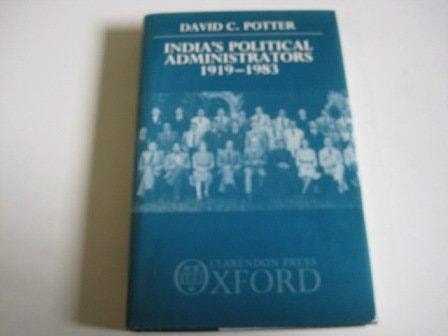
India's Political Administrators: 1919-1983
0
0
As an Amazon Associate and affiliate partner, Menrva Books earns from qualifying purchases. Learn more
Author Description
This book examines how the British ruled India and why the colonial adminstrative structures they initiated are still prevalent in India today. Studying the Indian Civil Service and its successor, the Indian Administrative Service, and drawing on reminiscences of the men and women who served in them as well as previously unpublished documents, Potter explains how state forms are reproduced through time despite political changes in their environment.
Menrva's Summary
THE THESIS
This book investigates the persistence of colonial administrative structures in India and the mechanisms through which these state forms are reproduced across decades of political change. David C. Potter, an expert in South Asian political systems, utilizes a combination of archival research and personal accounts from former civil servants to analyze the transition from the Indian Civil Service to the Indian Administrative Service. The work argues that institutional inertia and established bureaucratic norms have allowed colonial-era governance models to remain deeply embedded in the modern Indian state.
THE SCOPE MAP
What You Will Find
- Historical analysis of the Indian Civil Service from 1919 to 1983
- Examination of the transition to the Indian Administrative Service
- Primary source material including unpublished documents and personal reminiscences
- Theoretical framework regarding the reproduction of state administrative forms
THE AUTHORITY PERSPECTIVE
Scholars of South Asian history and public administration frequently cite this work as a definitive study on the continuity of bureaucratic institutions in post-colonial India. The text is recognized for its rigorous use of archival data and its clear explanation of how colonial legacies shape contemporary governance.
Page Count:
350
Publication Date:
1987-03-26
Publisher:
Oxford University Press
ISBN-10:
0198215746
ISBN-13:
9780198215745
History
Civil Service
Public Administration
India
Colonialism
Community Tags
Similar Books