Colonial Terror: Torture and State Violence in Colonial India
0
0
As an Amazon Associate and affiliate partner, Menrva Books earns from qualifying purchases. Learn more
Author Description
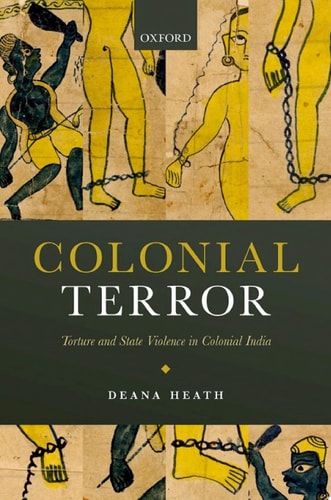
Focusing on India between the early nineteenth century and the First World War, Colonial Terror explores the centrality of the torture of Indian bodies to the law-preserving violence of colonial rule and some of the ways in which extraordinary violence was embedded in the ordinary operation of colonial states. Although enacted largely by Indians on Indian bodies, particularly by subaltern members of the police, the book argues that torture was facilitated, systematized, and ultimately sanctioned by first the East India Company and then the Raj because it benefitted the colonial regime, since rendering the police a source of terror played a key role in the construction and maitenance of state sovereignty. Drawing upon the work of both Giorgio Agamben and Michel Foucault, Colonial Terror contends, furthermore, that it is only possible to understand the terrorizing nature of the colonial police in India by viewing colonial India as a 'regime of exception' in which two different forms of exceptionality were in operation - one wrought through the exclusion of particular groups or segments of the Indian population from the law and the other by petty sovereigns in their enactment of illegal violence in the operation of the law. It was in such fertile ground, in which colonial subjects were both included within the domain of colonial law while also being abandoned by it, that torture was able to flourish.
Menrva's Summary
THE THESIS
This book investigates how the systematic use of torture by colonial police forces functioned as a foundational mechanism for maintaining state sovereignty in British India. Prof. Deana Heath utilizes a historical framework to analyze the period between the early nineteenth century and the First World War. By applying the theoretical lenses of Giorgio Agamben and Michel Foucault, the author argues that colonial India operated as a 'regime of exception' where state-sanctioned violence was embedded within the ordinary administration of law.
THE SCOPE MAP
What You Will Find
- Historical analysis of police practices in India from the early 1800s to 1914
- Application of Agamben’s 'state of exception' and Foucault’s theories on power and discipline
- Examination of the relationship between subaltern police agents and colonial administrative sanction
Scope Limits
- The study focuses primarily on the institutional and legal structures of the British Raj and East India Company rather than individual victim narratives
- The analysis is geographically confined to the Indian subcontinent under British rule
THE AUTHORITY PERSPECTIVE
Scholars in post-colonial studies and legal history identify this work as a rigorous examination of the intersection between administrative law and state-sponsored violence. Readers frequently note the academic density of the prose and the sophisticated application of critical theory to historical archival data.
Page Count:
240
Publication Date:
2021-01-01
Publisher:
OUP Oxford
ISBN-10:
0192646168
ISBN-13:
9780192646163
Politics
History
Specific Topics
Human rights
Colonialism
India
Sociology
Asian History
Community Tags
Similar Books