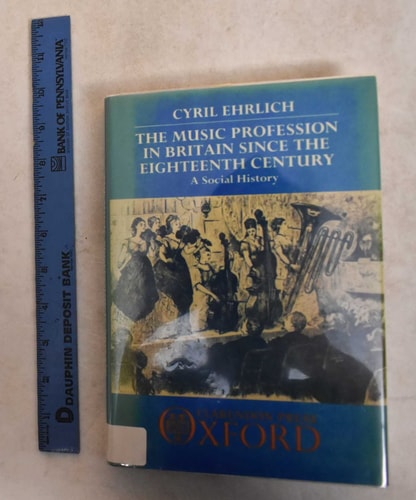
The Music Profession in Britain since the Eighteenth Century: A Social History
0
0
As an Amazon Associate and affiliate partner, Menrva Books earns from qualifying purchases. Learn more
Author Description
This is the first history of an occupational group that aspired to, but failed to achieve, the status of a liberal profession. The book explains the vigorous expansion of the music profession in the 19th and early 20th centuries, as the widespread demand for lessons and the revolution in commercialized entertainment created new employment opportunities, and follows the profession through to its subsequent decline, as changing leisure patterns, "talkies", and relentless improvements in recording technologies displaced both teachers and performers. This wideranging study also discusses the origins of musicians' unions and professional associations, and the proliferation of conservatories and diplomas that persist right up to the present day.
Menrva's Summary
THE THESIS
This study investigates the historical trajectory of the music profession in Britain, specifically examining why this occupational group struggled to attain the status of a traditional liberal profession. Cyril Ehrlich, a noted economic historian, utilizes archival research and institutional records to analyze the expansion of music as a career during the 19th and 20th centuries. He argues that while commercial demand and educational proliferation initially bolstered the profession, subsequent technological shifts and evolving leisure habits fundamentally destabilized its economic foundation.
THE SCOPE MAP
What You Will Find
- Analysis of the rise and decline of music as a viable occupation from the 18th century to the modern era.
- Examination of the impact of recording technology and cinema on traditional performance roles.
- Historical overview of the development of musicians' unions and professional associations.
- Evaluation of the role of conservatories and diploma systems in shaping professional identity.
THE AUTHORITY PERSPECTIVE
Scholars and historians recognize this work as a foundational text for understanding the intersection of labor history and the arts in Britain. Readers frequently note the academic rigor and the detailed economic analysis provided by the author throughout the text.
Page Count:
280
Publication Date:
1986-02-20
Publisher:
Oxford University Press
ISBN-10:
0198226659
ISBN-13:
9780198226659
Music
History
Social History
Professional Studies
British History
Music
Community Tags
Similar Books