The Mid-Victorian Generation 1846-1886
0
0
As an Amazon Associate and affiliate partner, Menrva Books earns from qualifying purchases. Learn more
Author Description
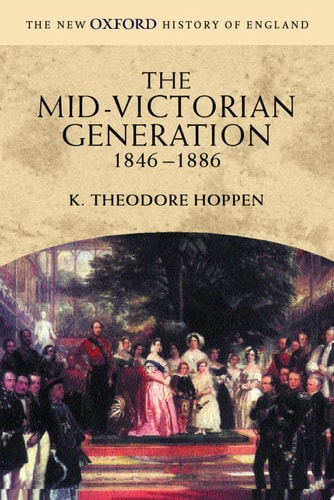
This third volume in the New Oxford History of England covers the period from the repeal of the Corn Laws to the dramatic failure of Gladstone's first Home Rule Bill. In his magisterial study of the mid-Victorian generation, Theodore Hoppen identifies three defining themes: "established industrialism"--the growing acceptance that factory life and manufacturing had come to stay; "multiple national identities" of the constituent parts of the United Kingdom; and "interlocking spheres," which the author uses to illuminate the formation of public culture in the period. This original and authoritative book will define these pivotal forty years in British history for the next generation.
Menrva's Summary
THE THESIS
This volume investigates the complex socio-political transformation of Britain between 1846 and 1886, questioning how industrialization and shifting national identities redefined the Victorian state. K. Theodore Hoppen, a distinguished historian, utilizes a vast array of primary sources and statistical data to construct a comprehensive framework for this era. He argues that the period was defined by the solidification of industrial norms, the negotiation of disparate national identities within the United Kingdom, and the emergence of interconnected cultural spheres. By examining the transition from the repeal of the Corn Laws to the political crisis of the Home Rule Bill, the author provides a rigorous analysis of the forces that shaped mid-Victorian society.
THE SCOPE MAP
What You Will Find
- Detailed examination of the British political landscape from 1846 to 1886.
- Analysis of the economic shift toward established industrialism and its social consequences.
- Exploration of the distinct national identities within England, Scotland, Ireland, and Wales.
- Investigation into the formation of public culture through the concept of interlocking spheres.
THE AUTHORITY PERSPECTIVE
Experts recognize this work as a foundational text for understanding the intricacies of mid-Victorian Britain. Readers frequently note the academic density of the prose, which serves as a definitive reference for scholars and students of nineteenth-century history.
Page Count:
808
Publication Date:
1998-04-30
Publisher:
Oxford University Press
ISBN-10:
0198228341
ISBN-13:
9780198228349
History
Social History
Victorian Era
Academic
British History
Political History
Community Tags
Similar Books