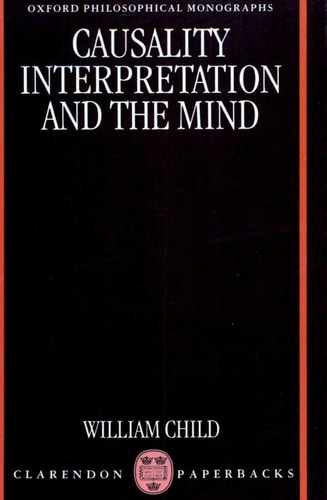
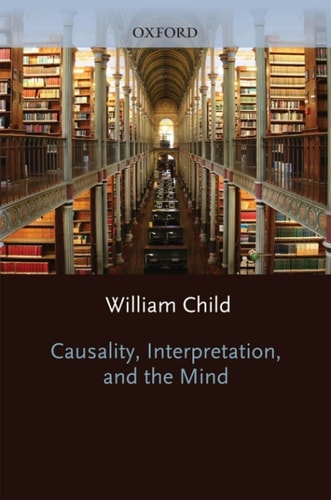
Causality, Interpretation, and the Mind
0
0
As an Amazon Associate and affiliate partner, Menrva Books earns from qualifying purchases. Learn more
Author Description
Philosophers of mind have long been interested in the relation between two ideas: that causality plays an essential role in our understanding of the mental; and that we can gain an understanding of belief and desire by considering the ascription of attitudes to people on the basis of what they say and do. Many have thought that those ideas are incompatible. William Child argues that there is in fact no tension between them, and that we should accept both. He shows how we can have a causal understanding of the mental without having to see attitudes and experiences as internal, causally interacting entities and he defends this view against influential objections. The book offers detailed discussions of many of Donald Davidson's contributions to the philosophy of mind, and also considers the work of Dennett, Anscombe, McDowell, and Rorty, among others. Issues discussed include: the nature of intentional phenomena; causal explanation; the character of visual experience; psychological explanation; and the causal relevance of mental properties.
Menrva's Summary
THE THESIS
This book investigates whether the role of causality in understanding the mental is compatible with the interpretive approach to belief and desire. William Child, a Fellow of All Souls, examines the perceived tension between causal explanations of mental states and the practice of attributing attitudes based on behavior. He argues that these two perspectives are not mutually exclusive, proposing a framework that allows for a causal understanding of the mind without reducing mental states to internal, causally interacting entities. The text synthesizes these arguments by engaging with the work of prominent philosophers such as Donald Davidson, Daniel Dennett, and G.E.M. Anscombe.
THE SCOPE MAP
What You Will Find
- Analysis of the nature of intentional phenomena and psychological explanation.
- Evaluation of the causal relevance of mental properties within a physicalist framework.
- Critical engagement with the work of Donald Davidson, Dennett, Anscombe, McDowell, and Rorty.
- Examination of the character of visual experience and its relation to causal theory.
THE AUTHORITY PERSPECTIVE
Experts recognize this work as a significant contribution to the debate surrounding Davidsonian philosophy and the philosophy of mind. Readers frequently note the academic density of the prose, which is intended for advanced students and professional philosophers.
Page Count:
248
Publication Date:
1994-04-28
Publisher:
Oxford University Press
ISBN-10:
0198239785
ISBN-13:
9780198239789
Philosophy
Causation
Academic
Epistemology
Metaphysics
Community Tags
Other Editions(2)
Similar Books