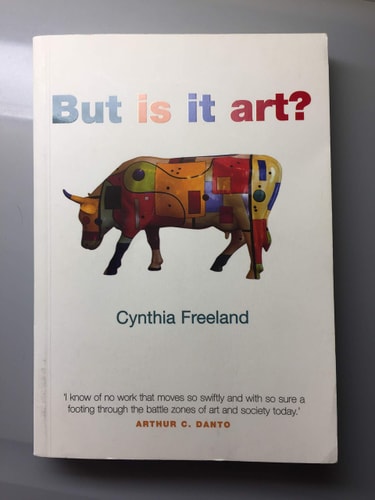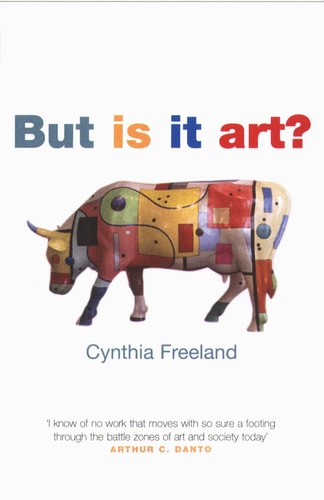
But Is It Art?: An Introduction to Art Theory
0
0
As an Amazon Associate and affiliate partner, Menrva Books earns from qualifying purchases. Learn more
Author Description
From Andy Warhol's Brillo boxes to provocative dung-splattered madonnas, in today's art world many strange, even shocking, things are put on display. This often leads exasperated viewers to exclaim--is this really art?In this invaluable primer on aesthetics, Freeland explains why innovation and controversy are so highly valued in art, weaving together philosophy and art theory with many engrossing examples. Writing clearly and perceptively, she explores the cultural meanings of art in different contexts, and highlights the continuities of tradition that stretch from modern, often sensational, works back to the ancient halls of the Parthenon, to the medieval cathedral of Chartres, and to African nkisi nkondi fetish statues. She explores the difficulties of interpretation, examines recent scientific research into the ways the brain perceives art, and looks to the still-emerging worlds of art on the web, video art, art museum CD-ROMS, and much more. In addition, Freeland guides us through the various theorists of art, from Aristotle and Kant to Baudrillard. Lastly, throughout this nuanced account of theories, artists, and works, Freeland provides us with a rich understanding of how cultural significance is captured in a physical medium, and why challenging our perceptions is, and always has been, central to the whole endeavor.It is instructive to recall that Henri Matisse himself was originally derided as a "wild beast." To horrified critics, his bold colors and distorted forms were outrageous. A century later, what was once shocking is now considered beautiful. And that, writes Freeland, is art.
Menrva's Summary
THE THESIS
This book investigates the fundamental question of what defines art by examining the intersection of philosophy, cultural context, and human perception. Cynthia Freeland, a professor of philosophy, utilizes a multidisciplinary approach to bridge the gap between classical aesthetic theory and contemporary, often controversial, artistic practices. By analyzing historical precedents alongside modern innovations, she argues that the challenge to perception is a consistent and necessary element of the artistic endeavor.
THE SCOPE MAP
What You Will Find
- Analysis of aesthetic theories from Aristotle and Kant to Baudrillard
- Examination of the role of controversy and innovation in art history
- Integration of cognitive science research regarding how the brain processes visual stimuli
- Exploration of digital media, video art, and web-based artistic expressions
Scope Limits
- Does not provide a comprehensive chronological history of art movements
- Does not offer a definitive or singular classification system for what constitutes art
THE AUTHORITY PERSPECTIVE
Experts and educators frequently cite this work as a foundational, accessible primer for students and general readers interested in aesthetics. Readers often note that the prose remains clear and engaging despite the inherent complexity of the philosophical concepts discussed.
Page Count:
256
Publication Date:
2002-04-04
Publisher:
Oxford University Press
ISBN-10:
0192853678
ISBN-13:
9780192853677
Philosophy
Non-Fiction
Humanities
Art Theory
Aesthetics
Art Criticism
Art History