Author Description
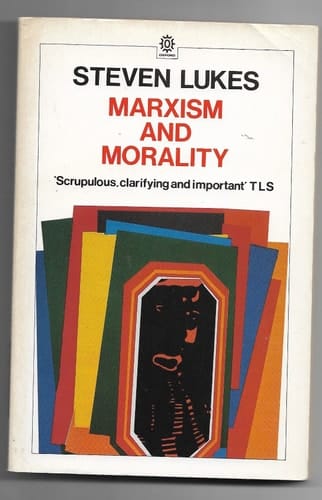
This book traces the development of Marx's ethics as they underwent various shifts and changes during different periods of his thought. In his early writings, his ethics were based on a concept of essence much like Aristotle's, which Marx tried to link to a principle of universalization similar to Kant's "categorical imperative." In the period 1845-46, Marx abandoned this view, holding morality to be incompatible with his historical materialism. In the later work he was less of a determinist. Though he no longer wished to reject morality, he did want to transcend a morality of burdensome obligation and constraint in order to realize a community built upon spontaneous bonds of solidarity.
Menrva's Summary
THE THESIS
This book investigates the evolution of Karl Marx's ethical framework and its shifting relationship with his broader materialist philosophy. Philip J. Kain, a scholar of political philosophy, examines Marx's intellectual trajectory by analyzing primary texts from his early, middle, and late periods. The author argues that Marx's perspective on morality underwent significant transformations, moving from Aristotelian-influenced essentialism to a rejection of morality during his historical materialist phase, and finally toward a vision of community based on solidarity rather than obligation.
THE SCOPE MAP
What You Will Find
- Analysis of Marx's early reliance on Aristotelian concepts of essence
- Examination of the influence of Kantian universalization on early Marxist thought
- Investigation into the 1845-46 period where Marx rejected traditional morality
- Discussion of the transition toward a post-deterministic view of human community
THE AUTHORITY PERSPECTIVE
Scholars and students of political theory frequently cite this work for its rigorous mapping of Marx's often contradictory ethical positions. Experts highlight the text as a valuable resource for understanding the tension between historical determinism and moral agency in Marxist thought.
Page Count:
232
Publication Date:
1989-03-16
Publisher:
Oxford University Press
ISBN-10:
0198244967
ISBN-13:
9780198244967
Philosophy
Marxism
Ethics
Community Tags
Similar Books